A Venetian living room with a view of the Dolomites
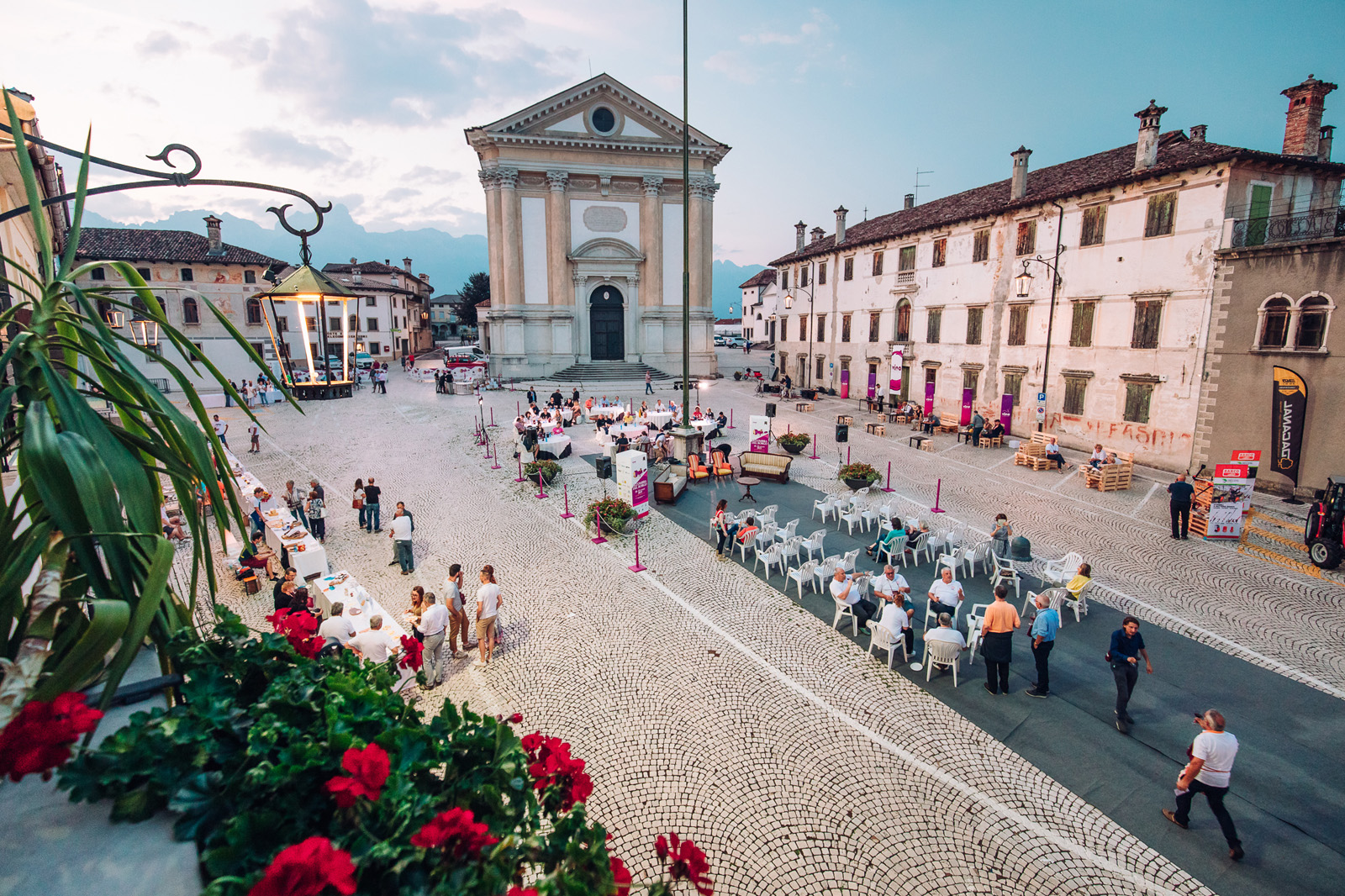
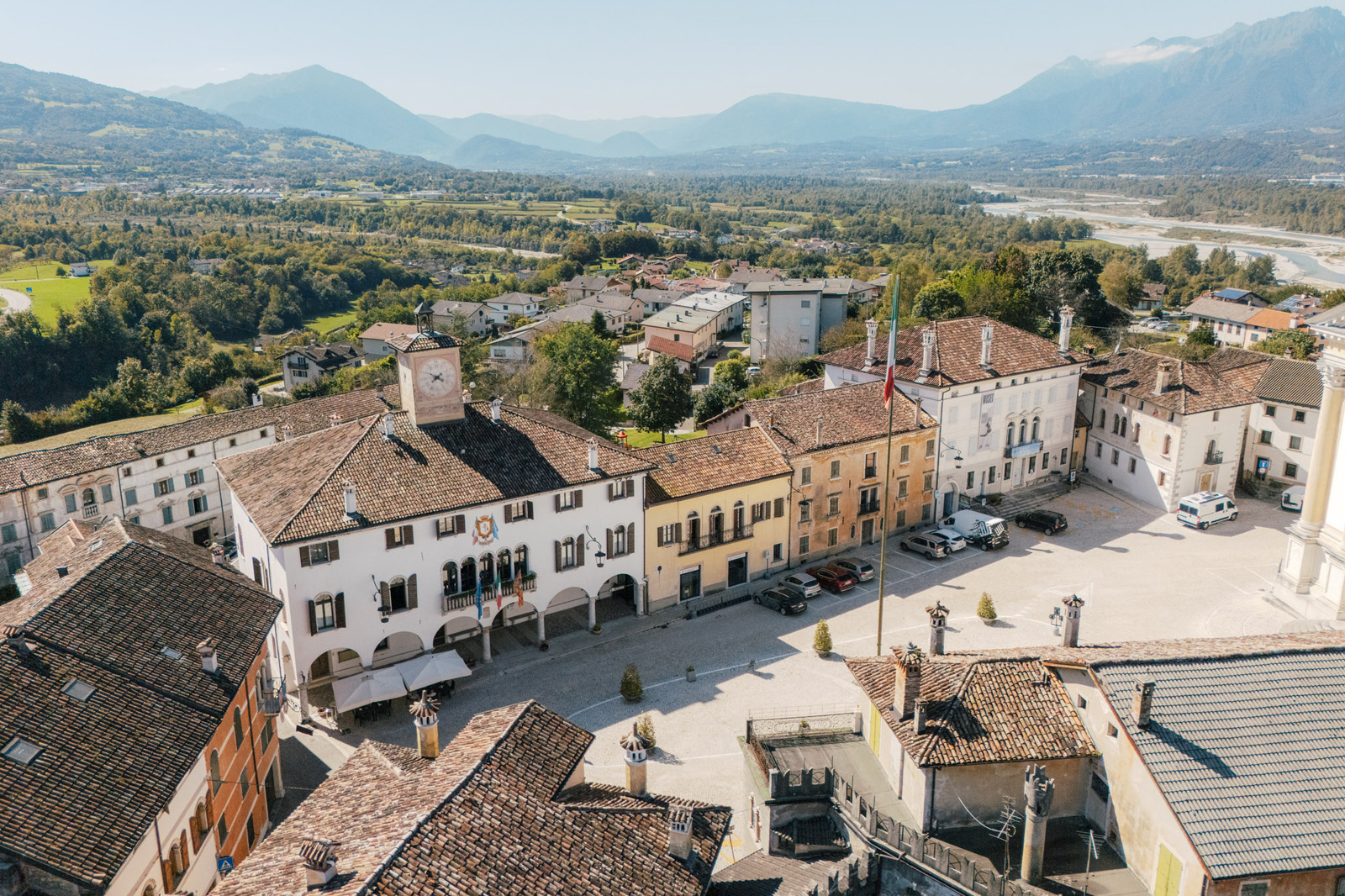
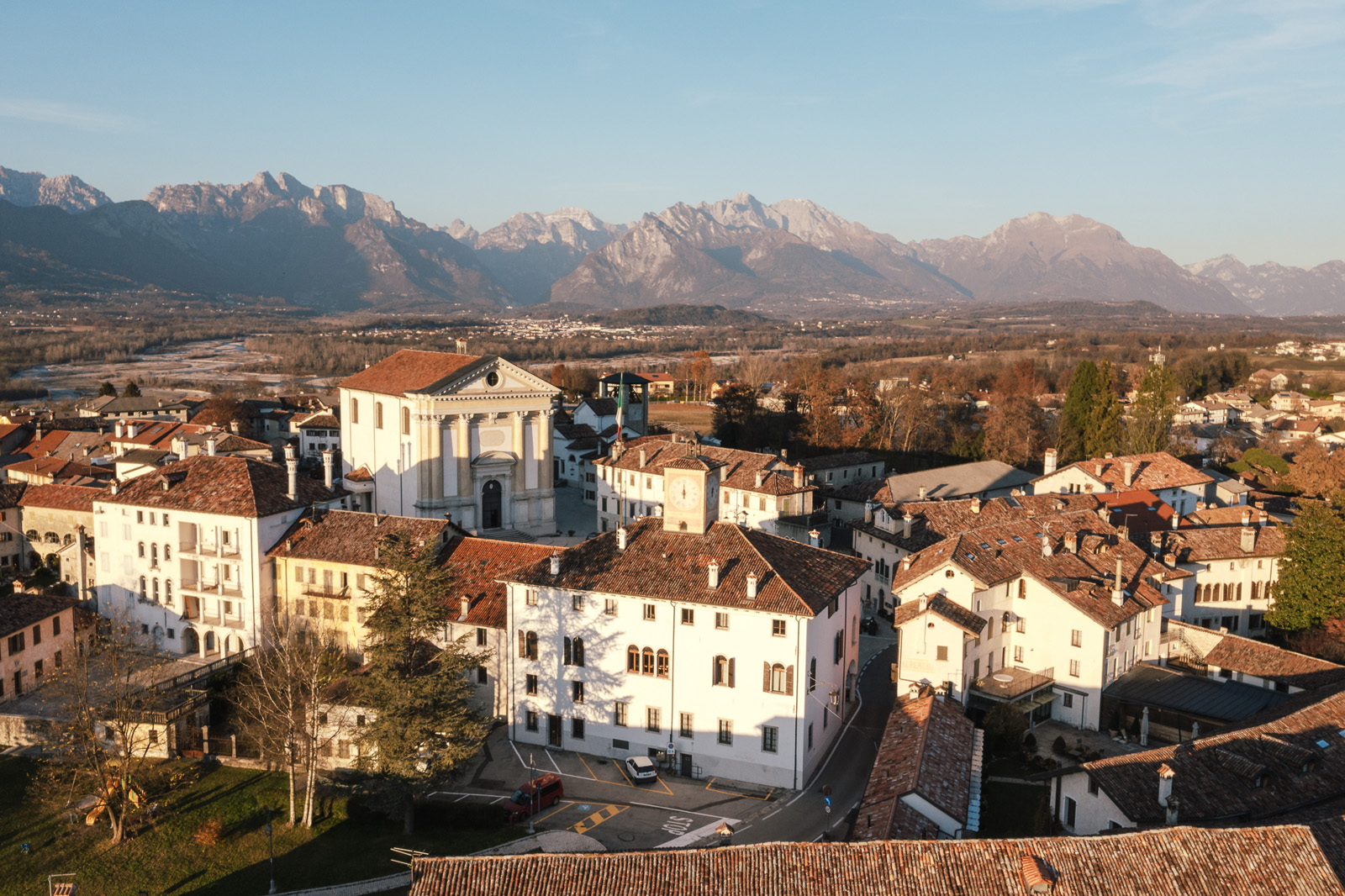
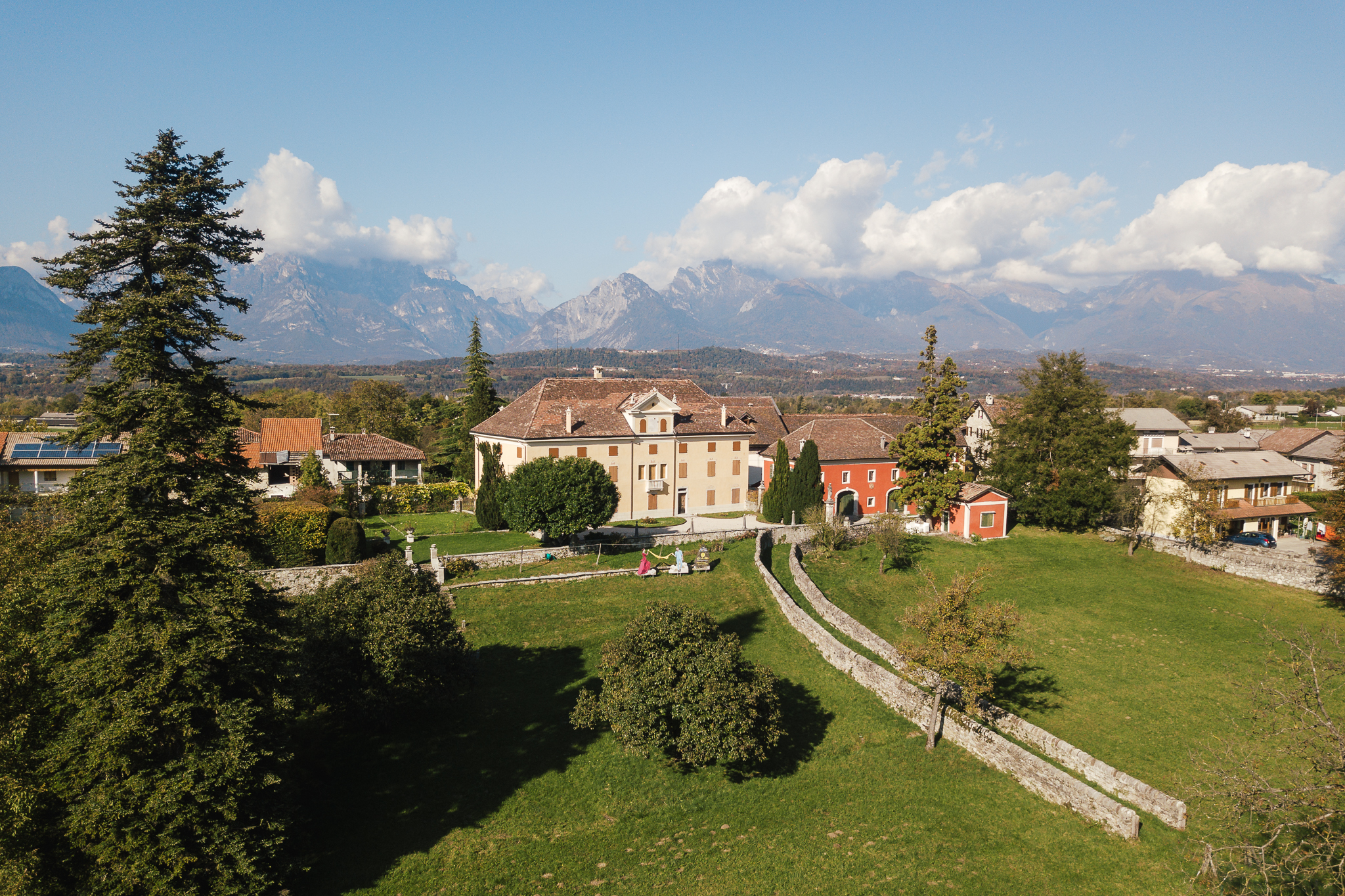
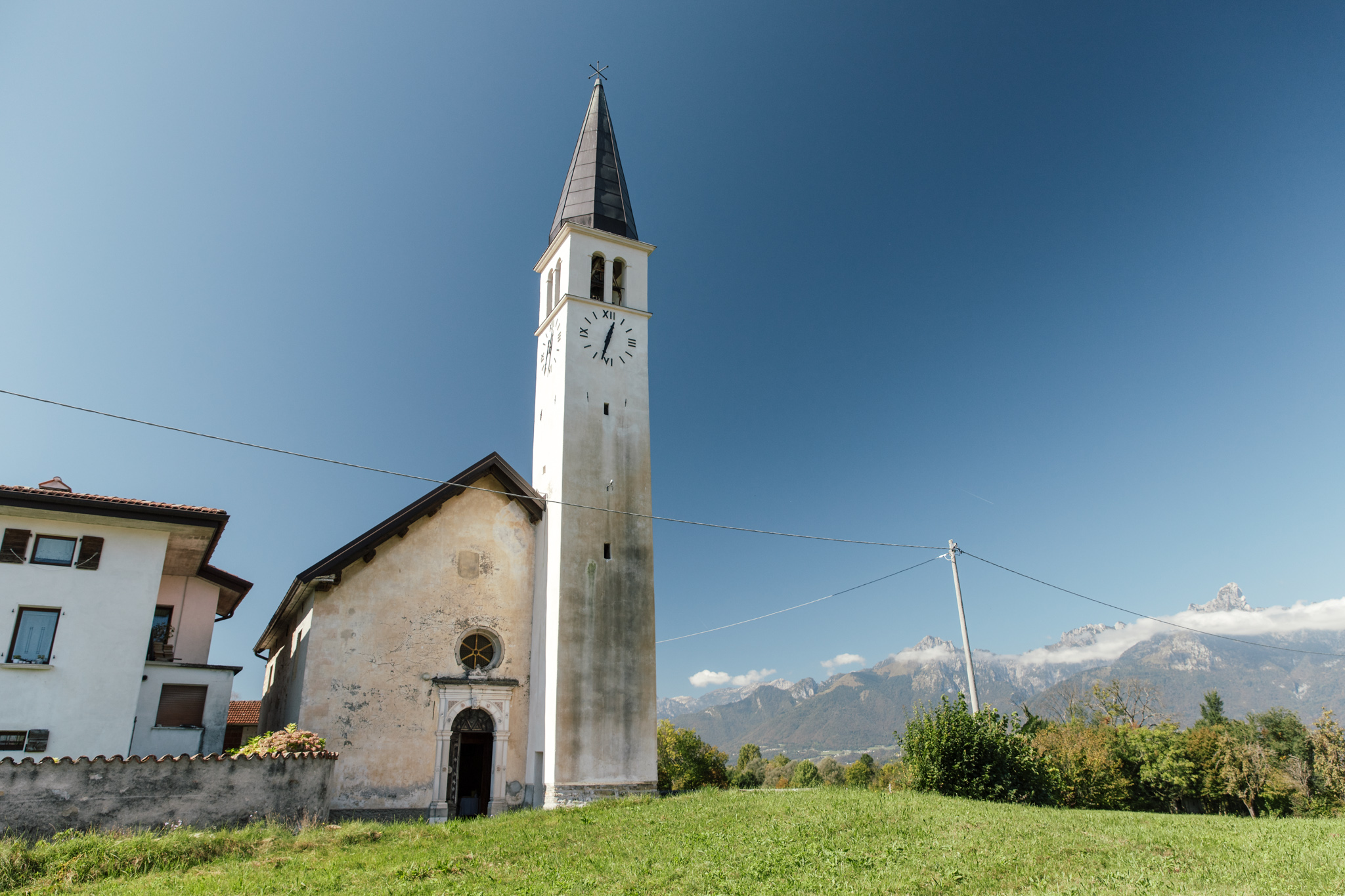
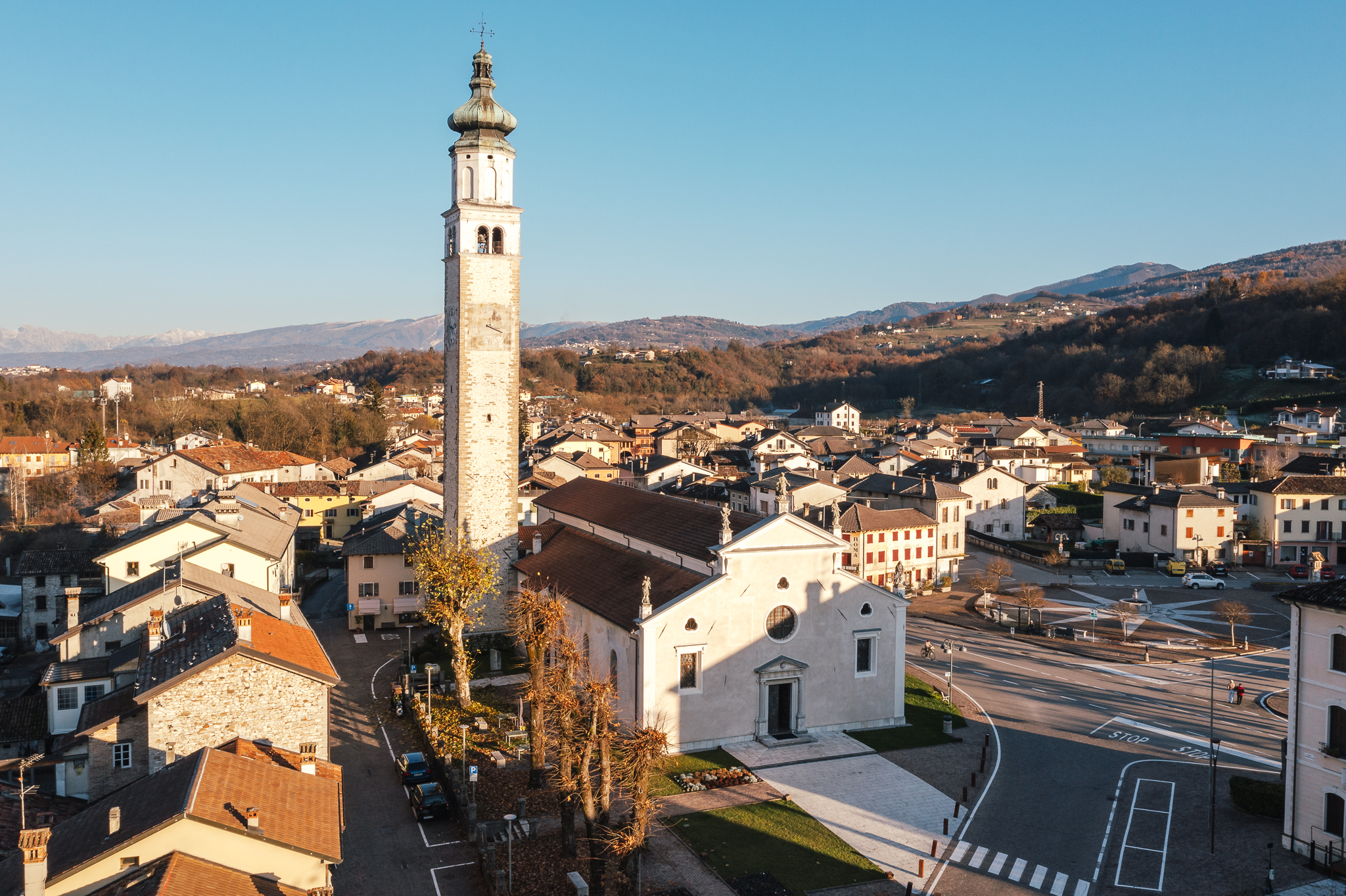
Strolling through the historic center of Mel—named one of Italy’s most beautiful villages and awarded the Orange Flag by the Touring Club—is a bit like stepping into a Venetian living room with a view of the Dolomites.
Its origins and history are ancient, and the artifacts on display at the Civic Archaeological Museum date back to the Paleoveneti.
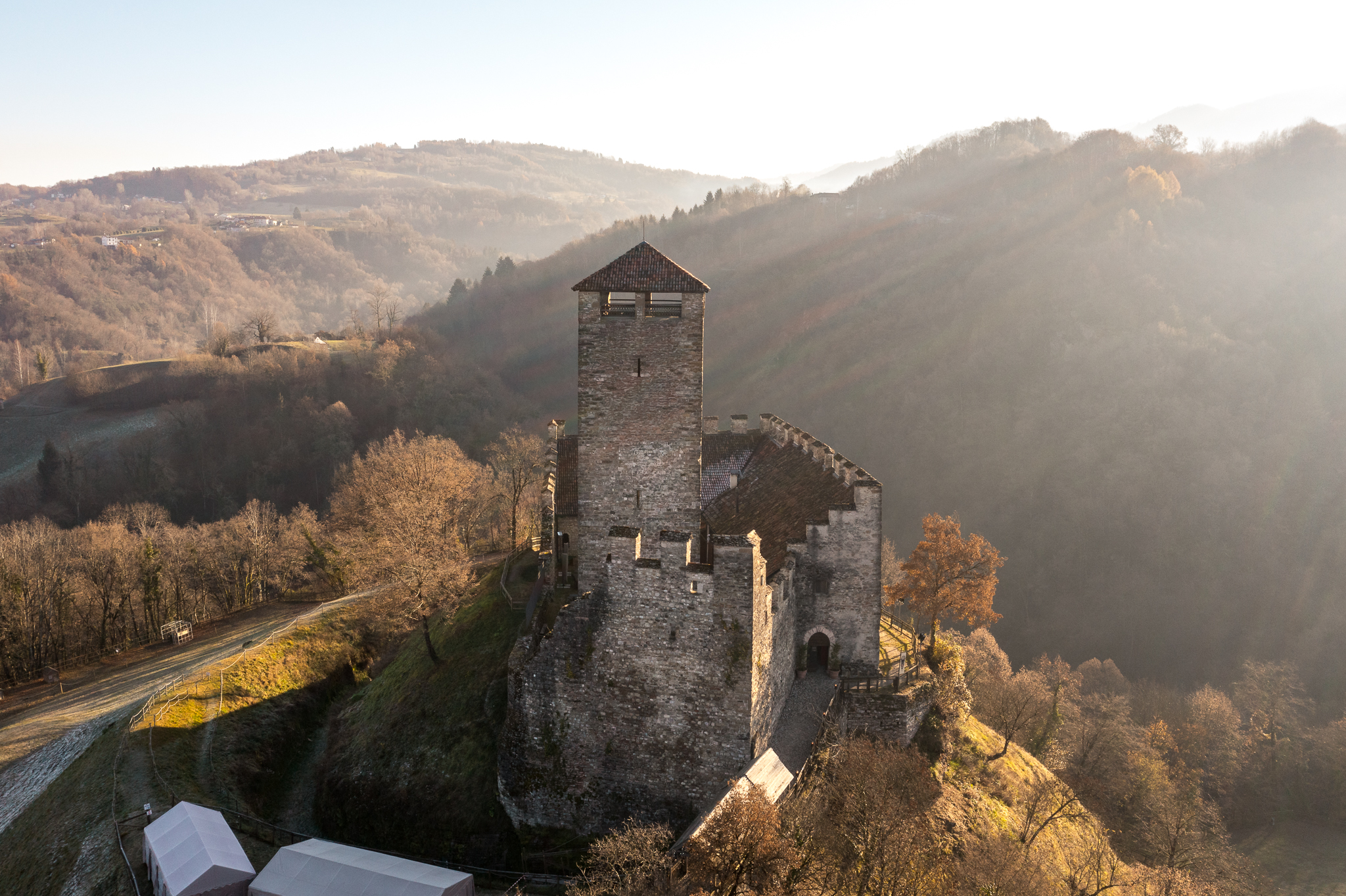
The origin of the name Mel dates back to the existence of Zumelle Castle, which was the “twin” of Castelvint Castle, which was destroyed after a battle. The relationship between the two fortifications is the source of the name: Castrum Gemellarum, later Zumellarum, and finally Mel by contraction.
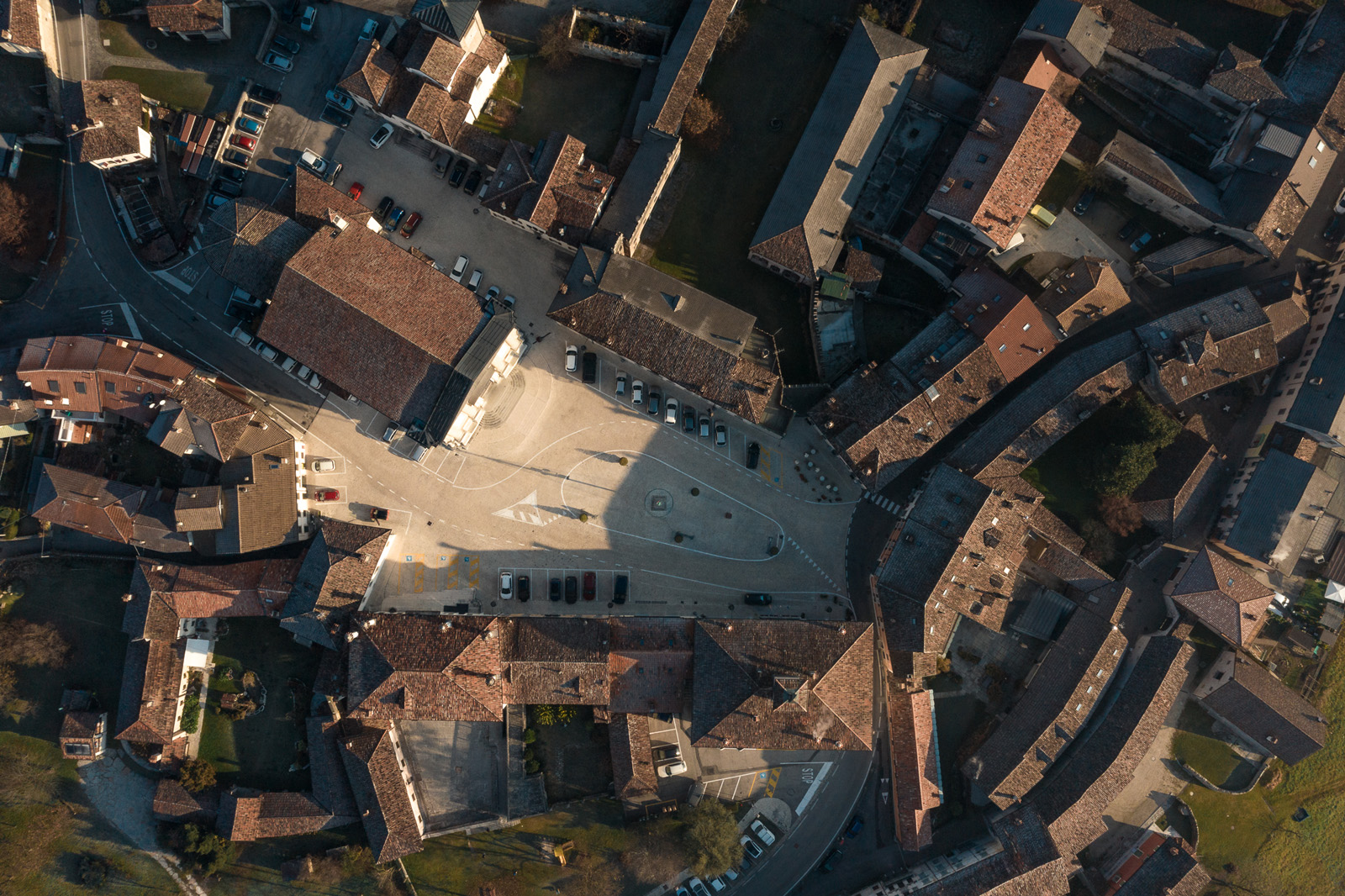
The earliest records trace the area back to the Paleoveneti of the 9th century B.C., followed by Gallic peoples until the 3rd century B.C., then the Romans, and, after the fall of the Roman Empire, the Lombards. During the Middle Ages, numerous manors were built to defend the valley and its trade routes, including Zumelle Castle and “Mel Castle.” From 1404 until 1797, the district of Zumelle was under the rule of the Most Serene Republic of Venice. It was during this period that the noble palaces were built, embellishing the historic center of Mel and transforming Mel’s main square into a Venetian salon.
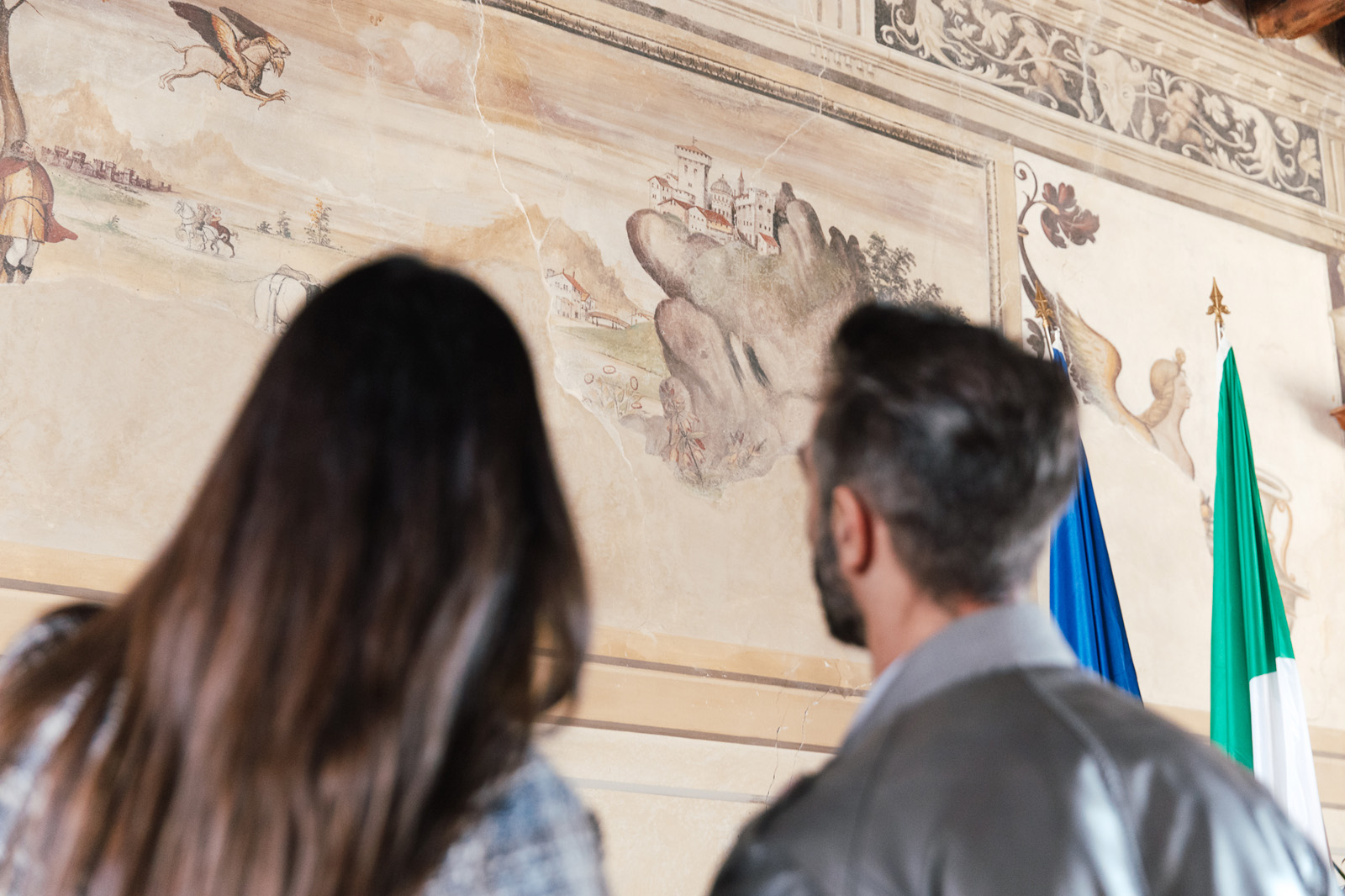
Justice was administered in the 15th-century Palazzo Zorzi (now the Mel Town Hall), which also housed the town’s prisons. On the first floor is the elegant main hall, which opens onto the square and features frescoes by the artist Marco da Mel depicting scenes from Ariosto’s Orlando Furioso. Across from Palazzo Zorzi, in the center of the square, stands L’Antenna, a landmark for Mel and the surrounding villages, where the town crier would proclaim edicts after three blasts of the trumpet.
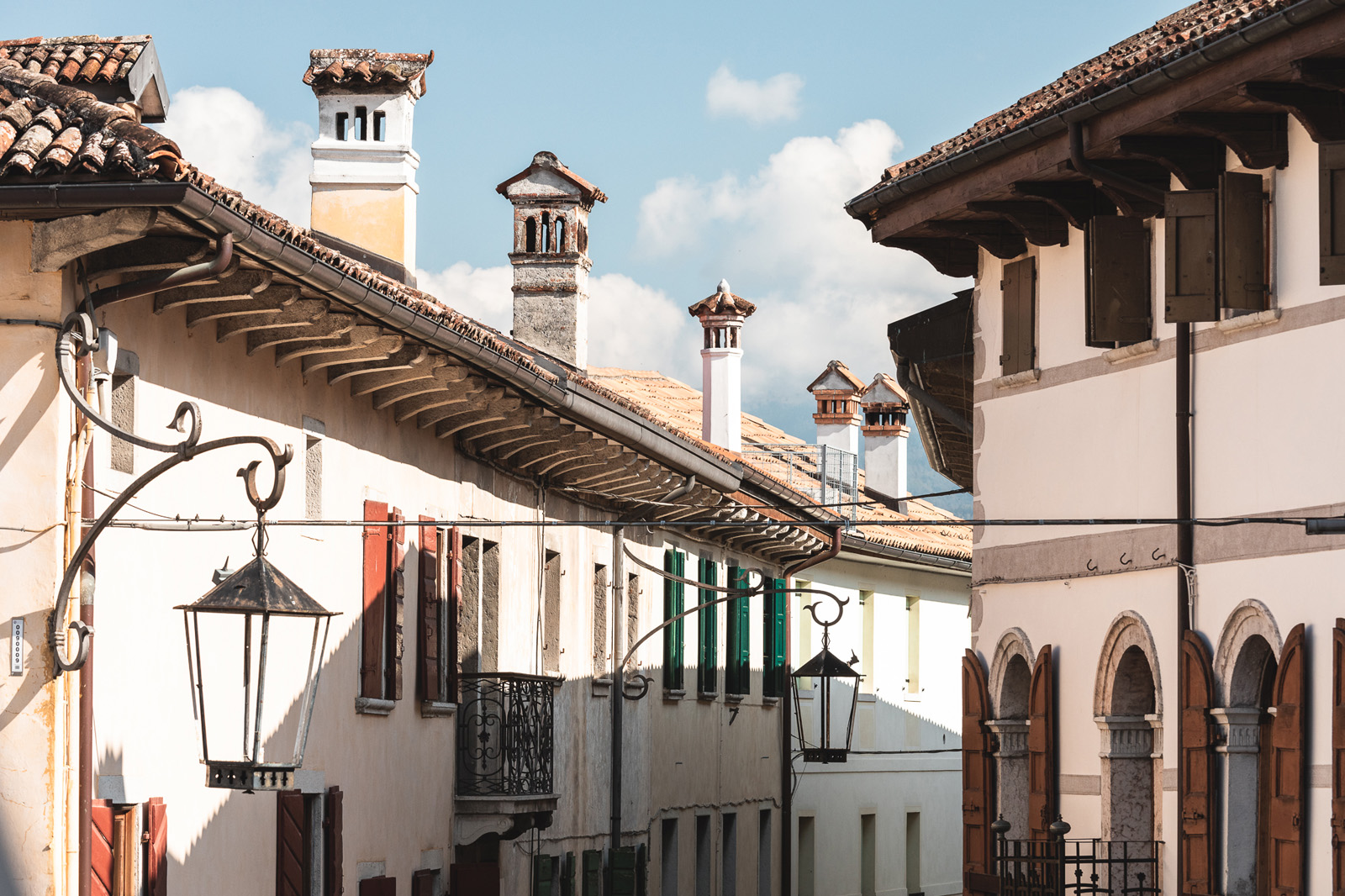
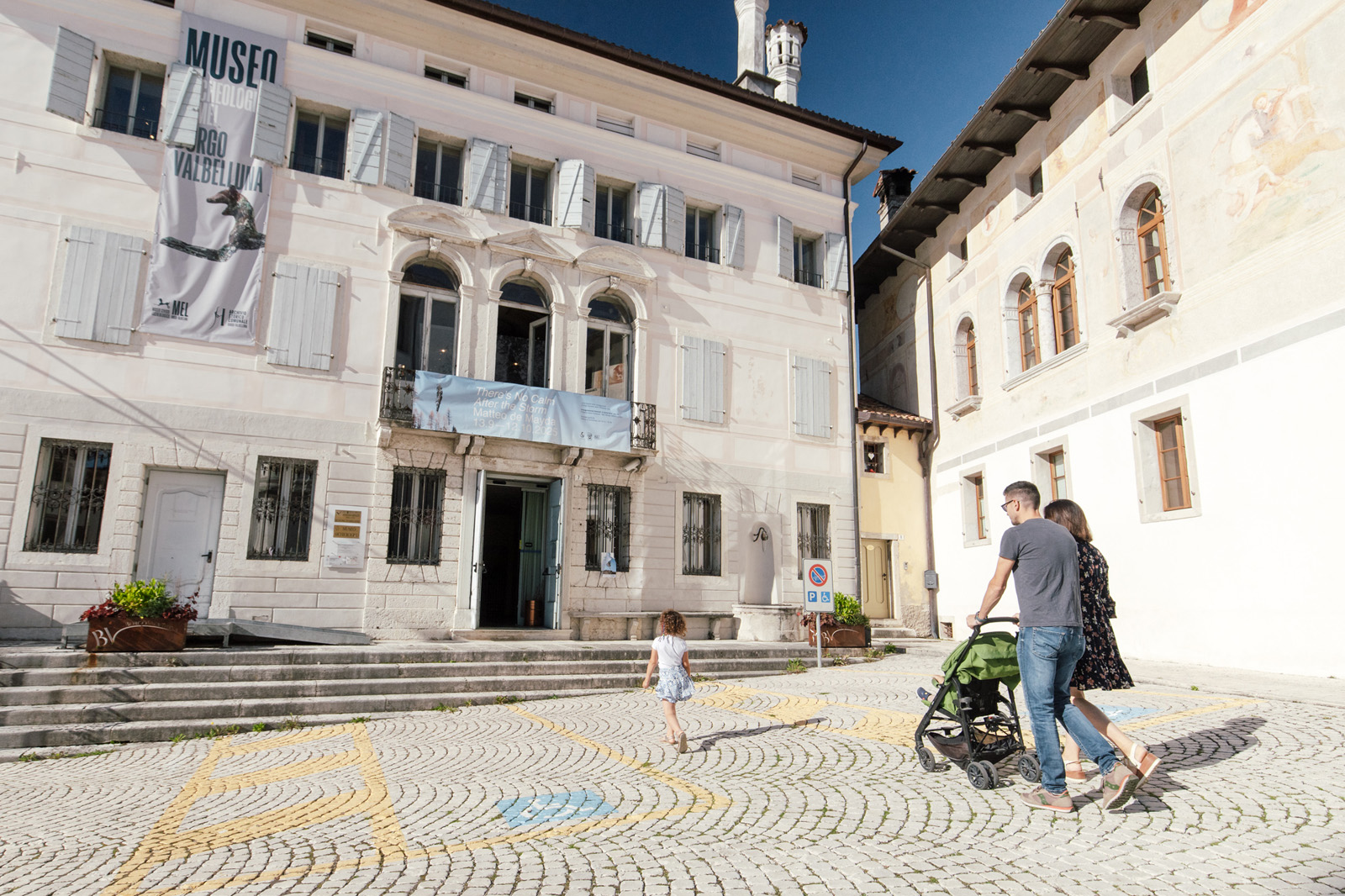
Moving clockwise, we come to the 17th-century Palazzo delle Contesse, whose façade features a refined balance of solid and void elements, accentuated by the distribution of the paintwork and the extremely elegant chimney pinnacles typical of Venetian architecture. The palace was owned by Adriano Del Zotto, who married the Venetian countess Elisabetta Papadopoli in his first marriage and, after becoming a widower, the Venetian countess Elisabetta Tiepolo in his second marriage. Hence the name Palazzo delle Contesse. The building is owned by the municipality and houses the permanent collection of the Civic Archaeological Museum as well as various temporary exhibitions. Step inside and be enchanted by the frescoes in the first-floor hall—one of which is attributed to the Belluno painter Antonio Bettio—by the Venetian-style floors featuring the phoenix, the heraldic symbol of the Papadopoli family, and by the view of the square.
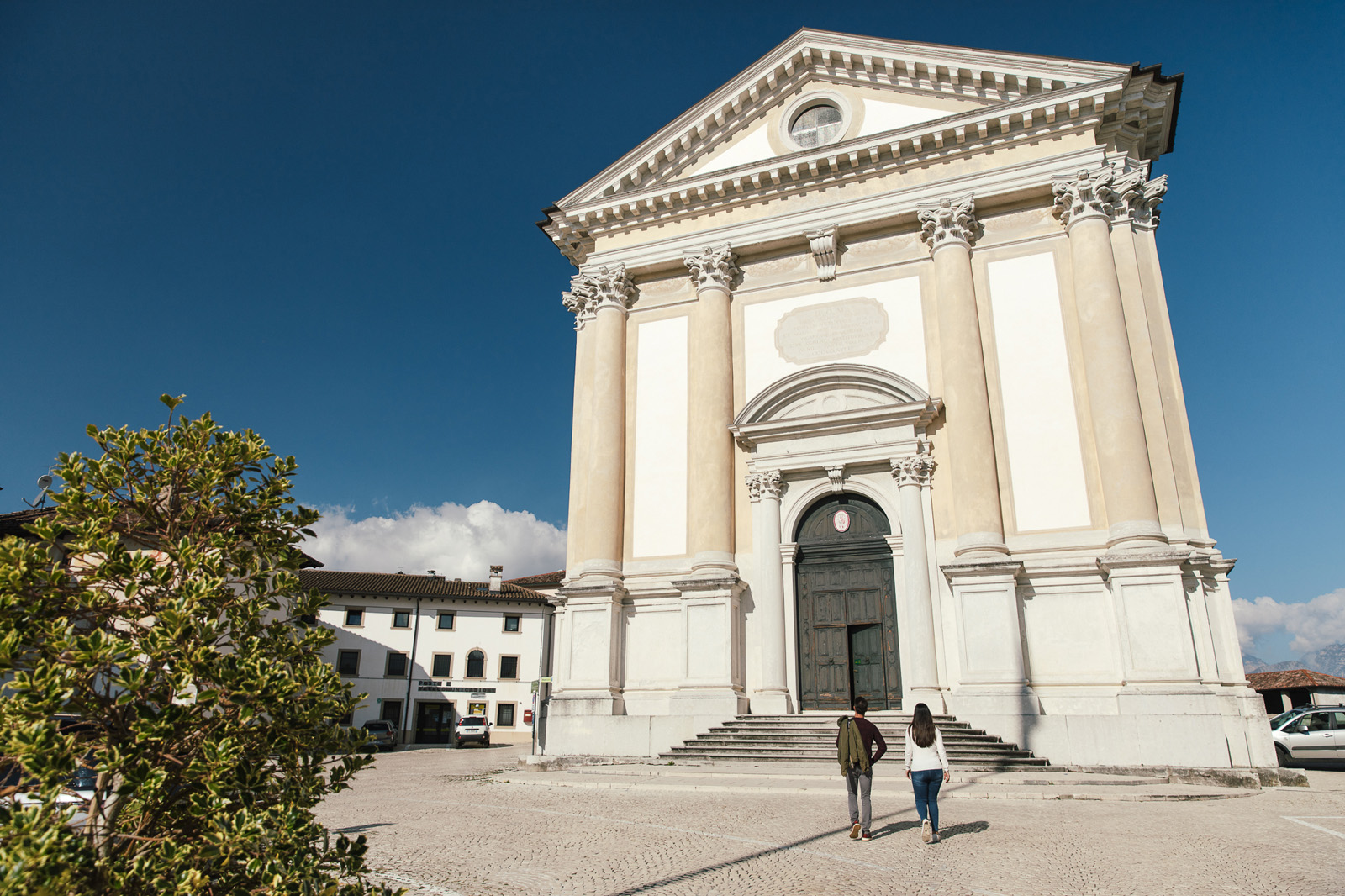
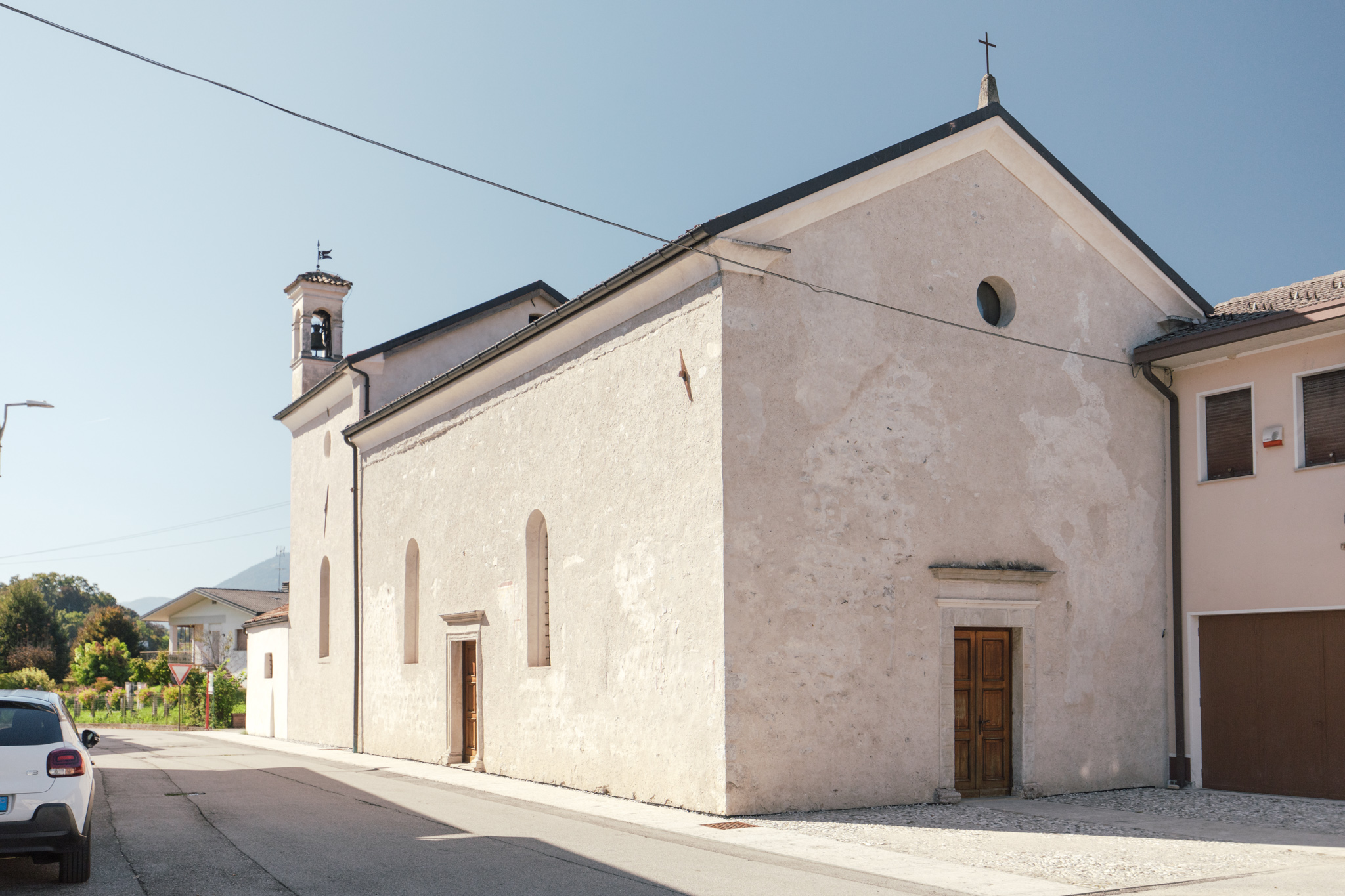
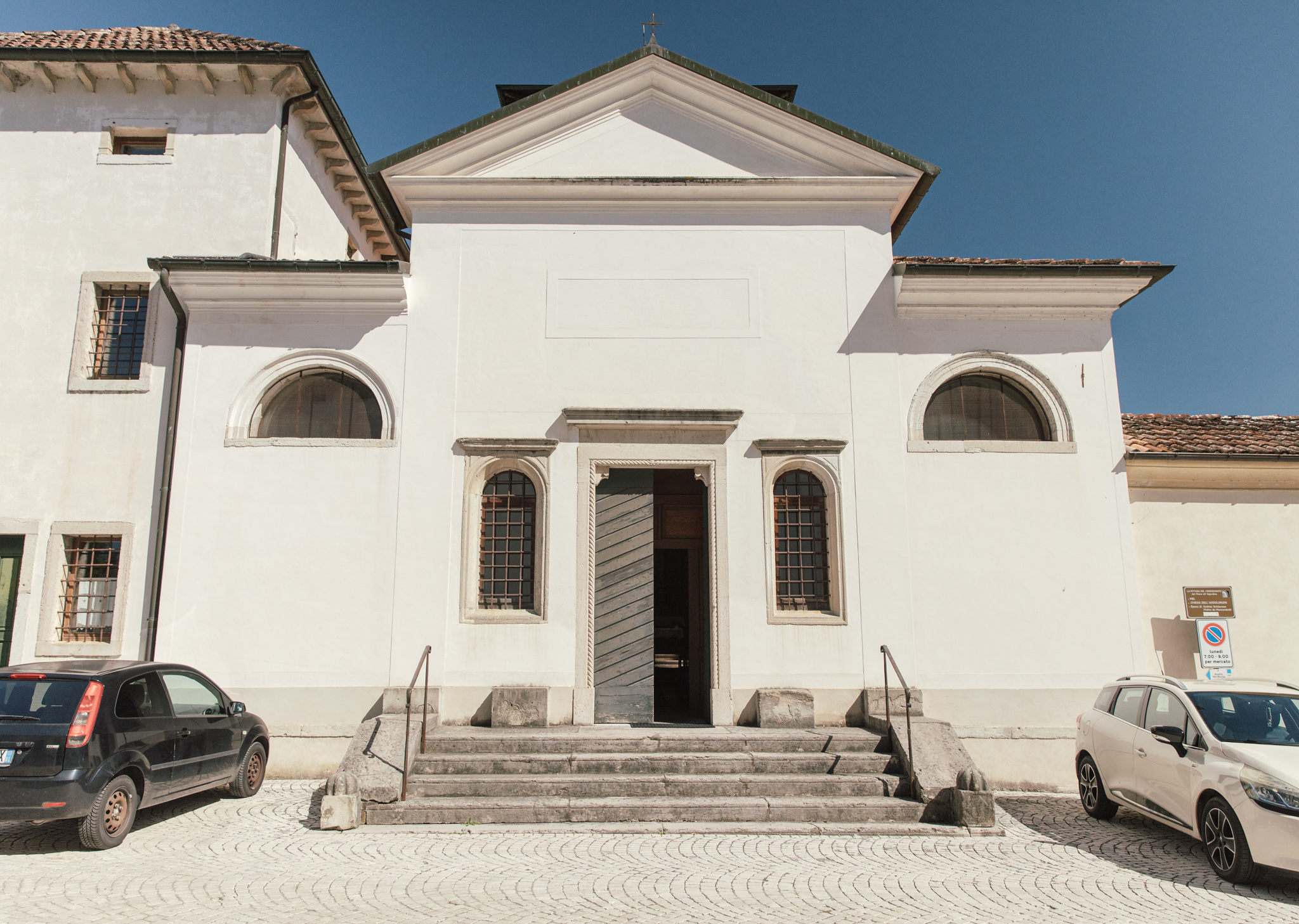
Palazzo Barbuio (Gaio–Francescon), designated a national monument, features a central section dating back to the 14th century. The wall facing the square, which has recently been restored, proudly displays a fresco depicting a battle scene and various figures. The Archpriest’s Church of Santa Maria Annunziata dominates the square; it was built between 1756 and 1768 following the destruction of the previous church. To its right stands the ancient Church of the Addolorata, which was erected between 1480 and 1490 with three naves and ten altars. It was an imposing church, but very little remains of the original structure and its bell tower. April 17, 1756, sealed the fate of the original church: lightning struck the bell tower, which caught fire and collapsed, severely damaging the church. Both churches house valuable works of art, including an altarpiece by Luigi Cima.
Continuing along the opposite side of the square, Palazzo Fulcis (formerly Tonetti), also known as Palazzo Guarnieri, with its four elegant salons—one for each season—a charming orangery, and its unique wells, was once used for silk production. The courtyard is currently open to visitors during the “Mele a Mel” market fair, held on the second weekend of October.
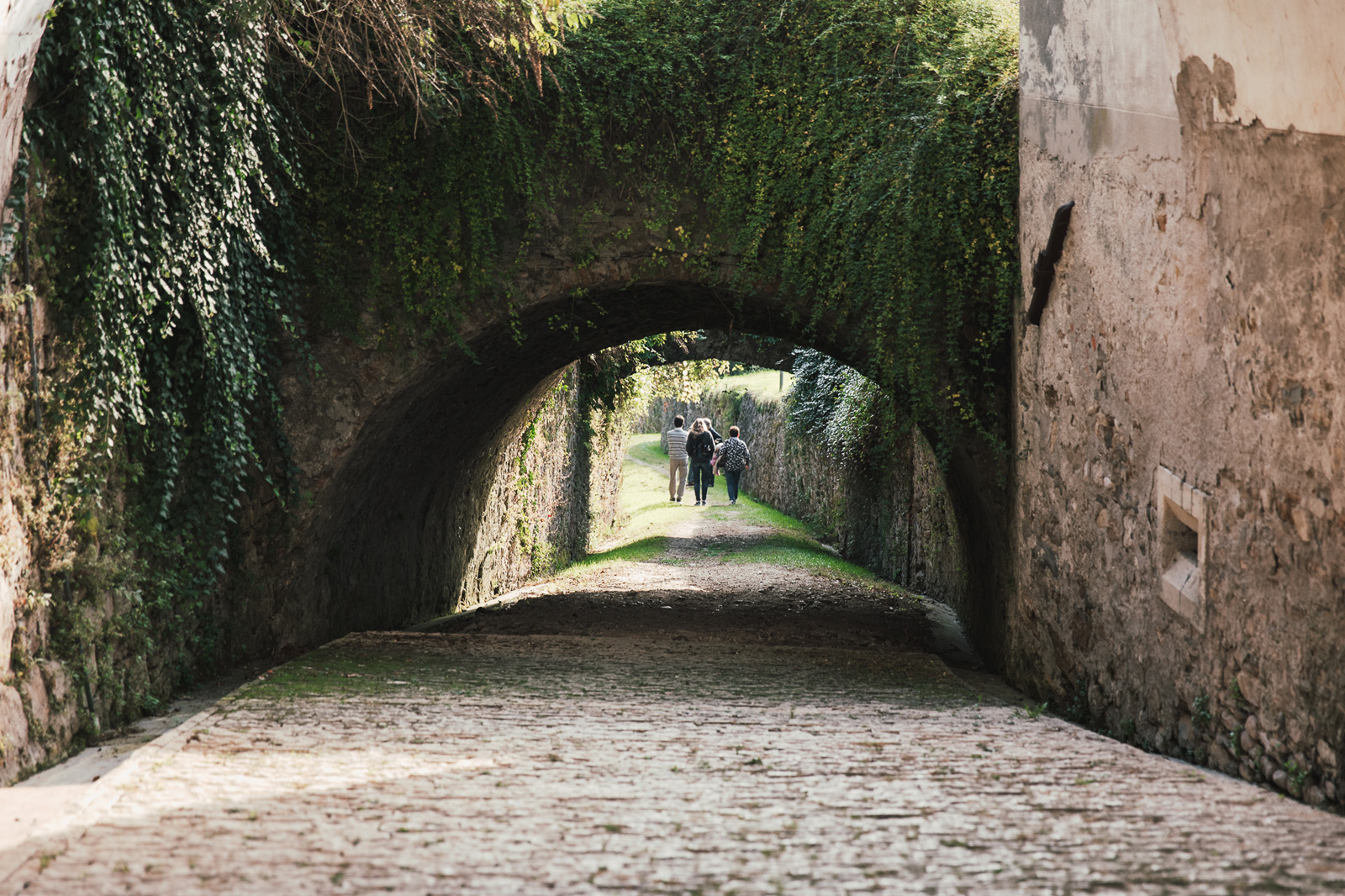
The 17th-century Villa Fulcis (Zadra), with its distinctive pediment—most likely added at a later date—and the serliana on the façade. The ancient Locanda al Cappello completes the square. Behind Palazzo Zorzi stands the majestic 17th-century Palazzo Pivetta-Stefani, which rises at the start of the descent of Via “Karèra,” the ancient carriage road that climbs from the hamlet of Puner toward the center of Mel, nestled between massive walls and once paved with cobblestones. Legend has it that this palace once housed the patriot Pier Fortunato Calvi, who, forced to flee, jumped from a balcony of the building to escape via “Karèra” toward Feltre.
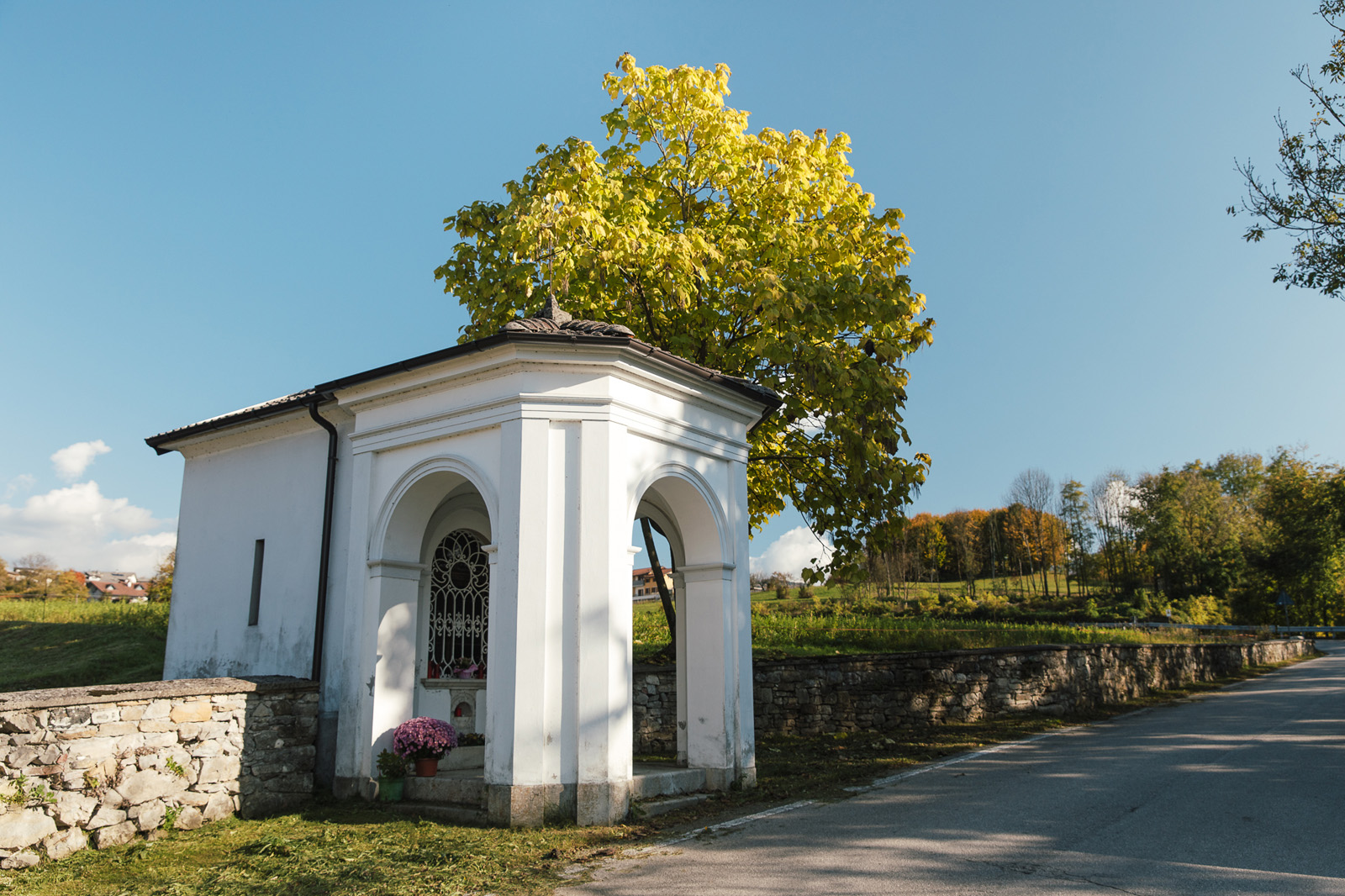
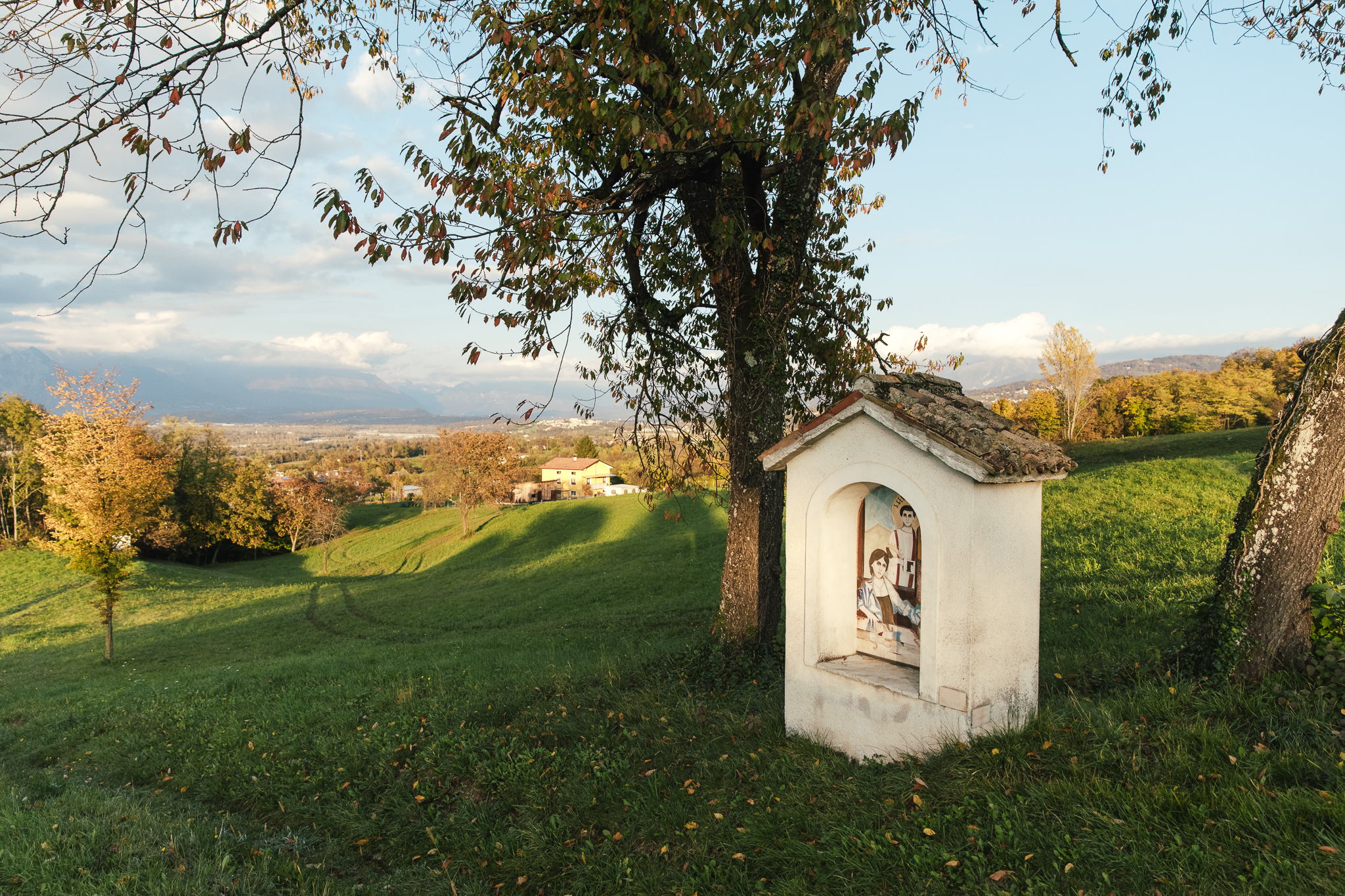
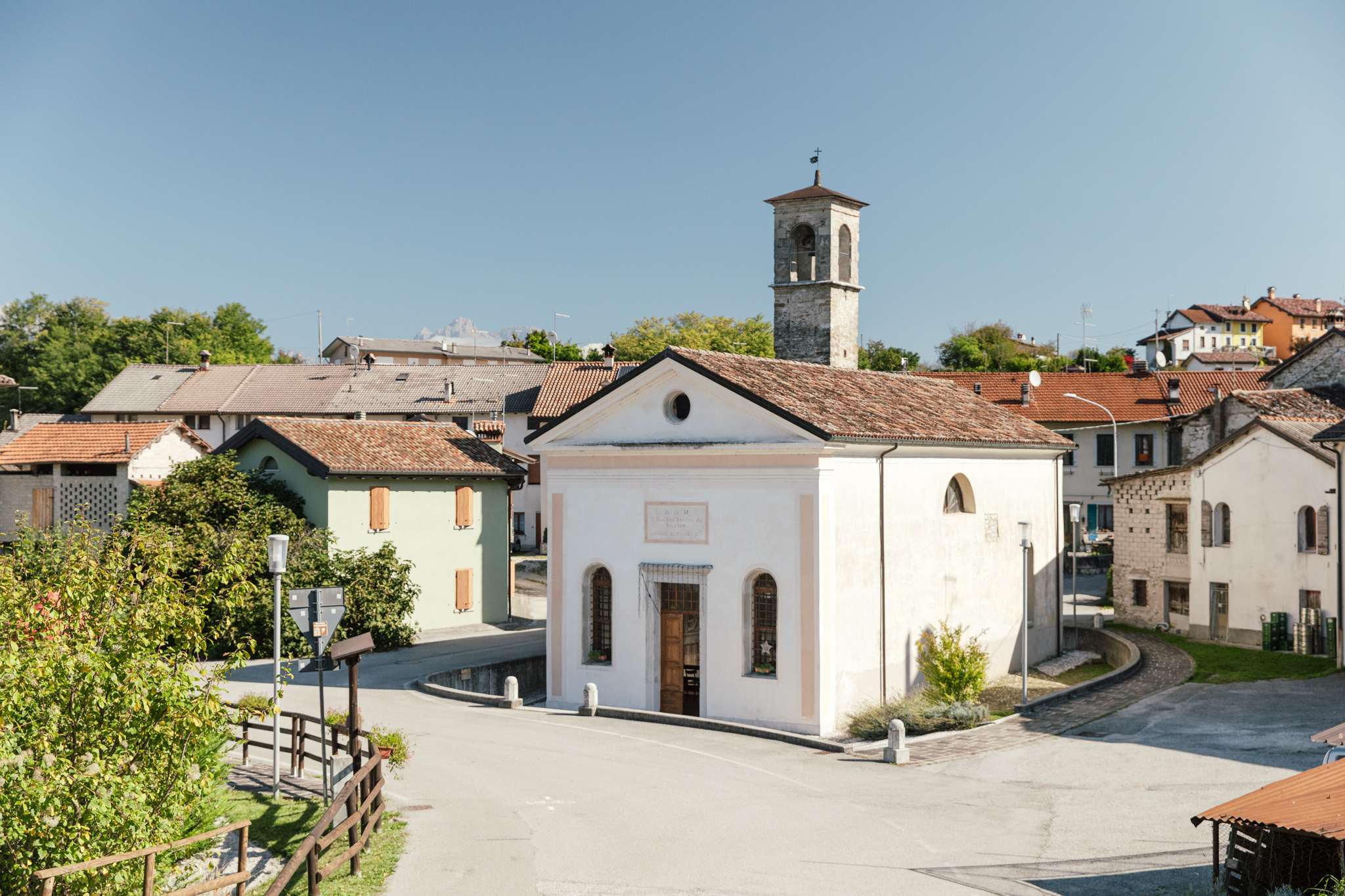
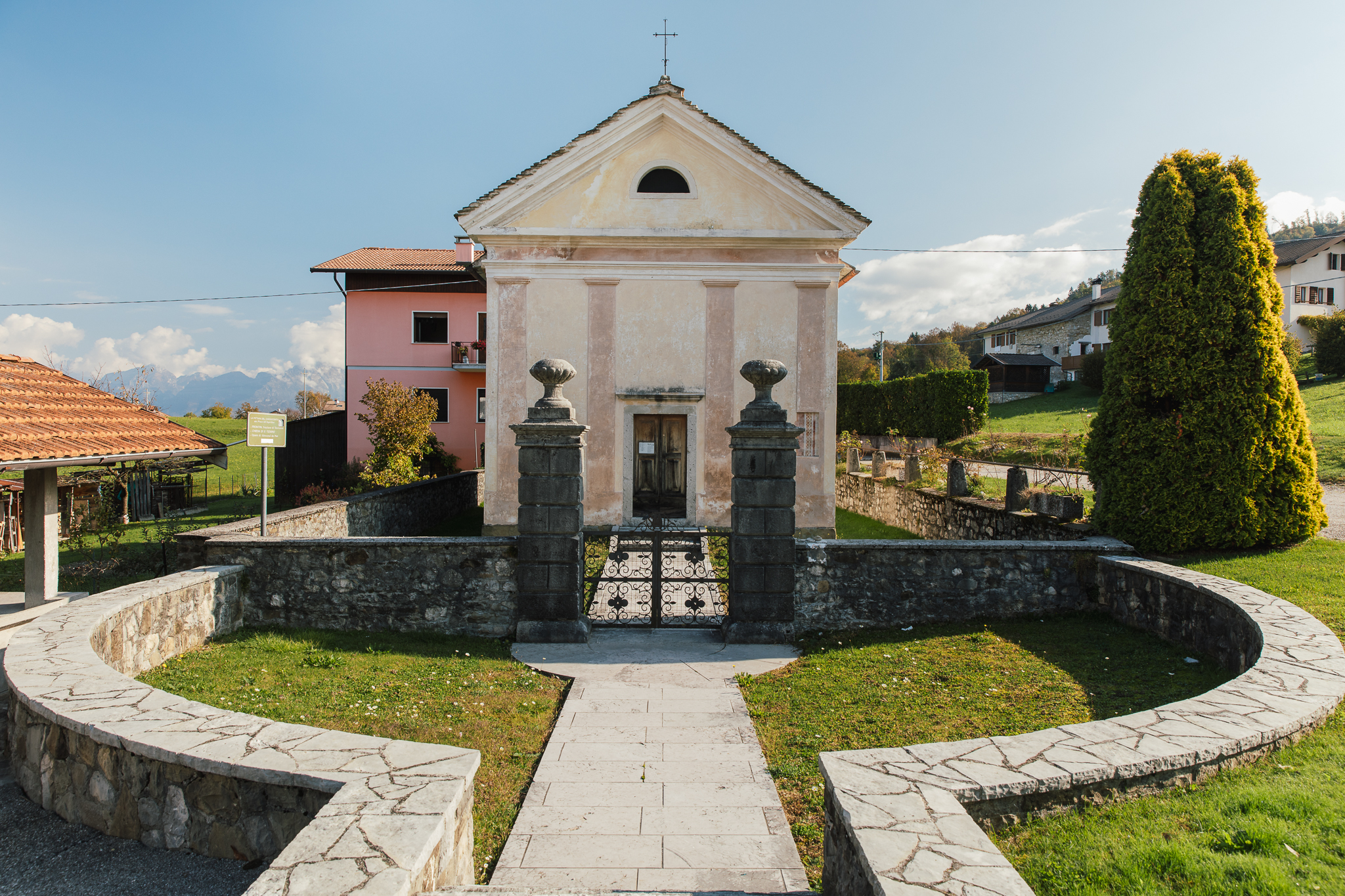
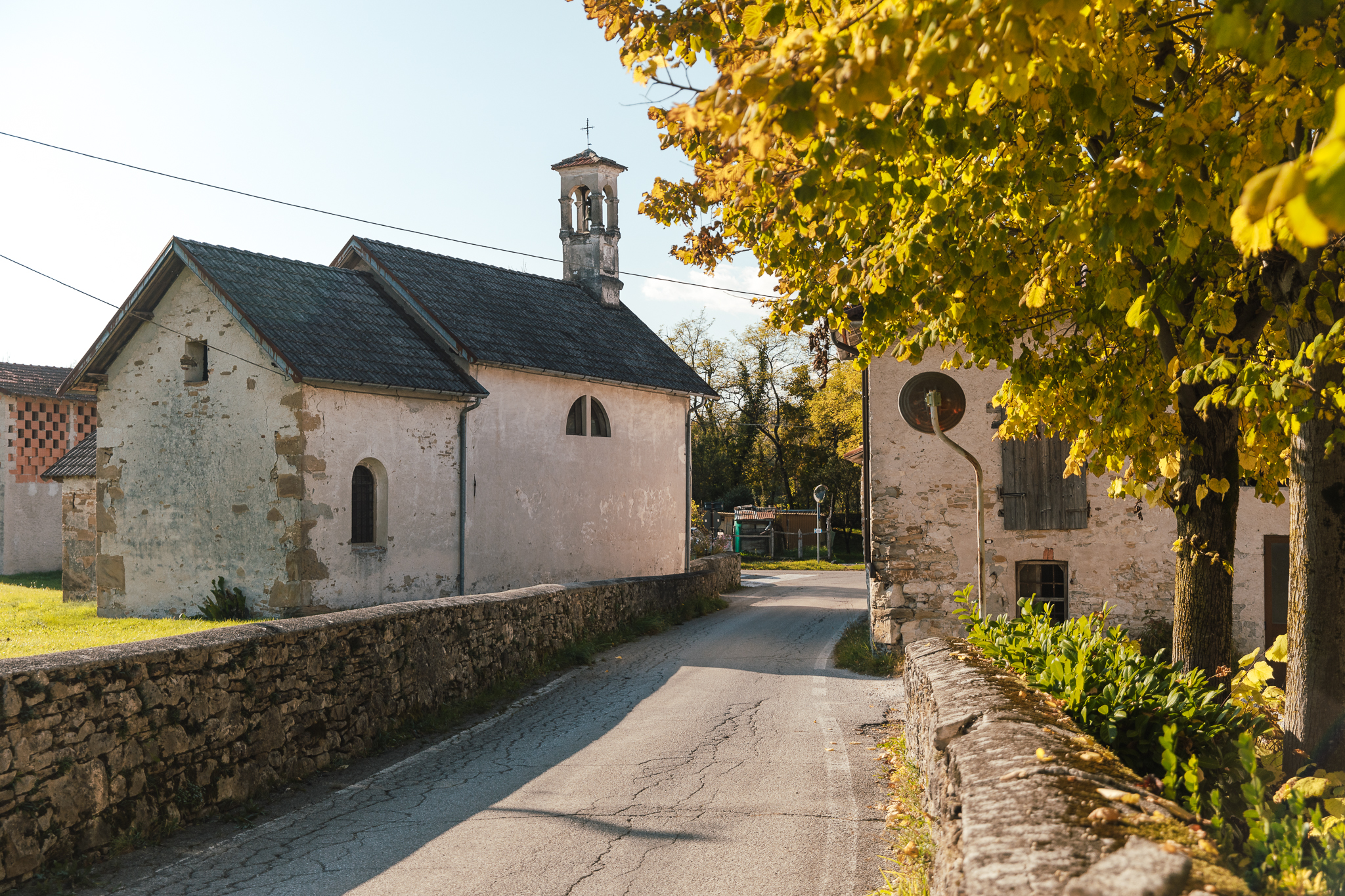
Along the road leading uphill to the town center, you can’t help but notice the Tempietto Fulcis, built as a votive offering by the residents of Zumello who were struck by a cholera epidemic in the mid-19th century; today it serves as a memorial to those who fell in the wars.
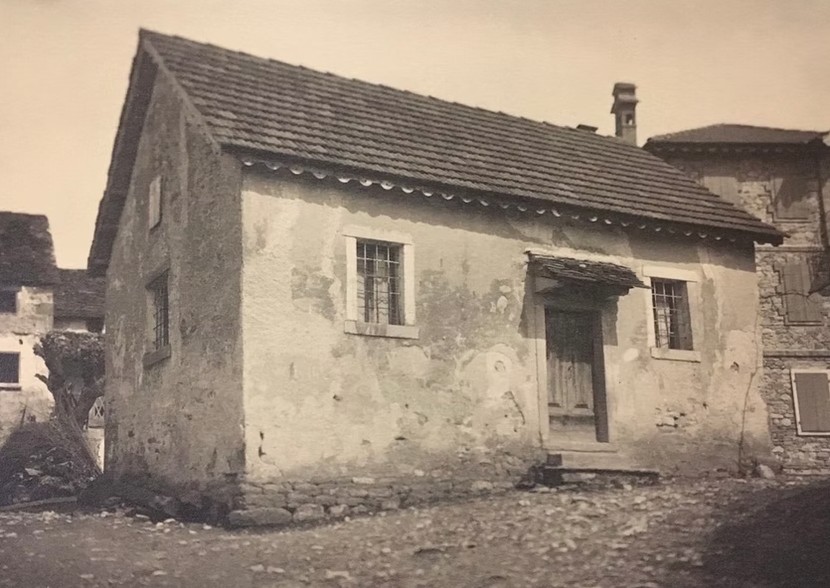
Just a few minutes from the square lies the Giazera, a stone structure built into the ground in the middle of a wooded hillside, which was used until a few decades ago to store perishable food.