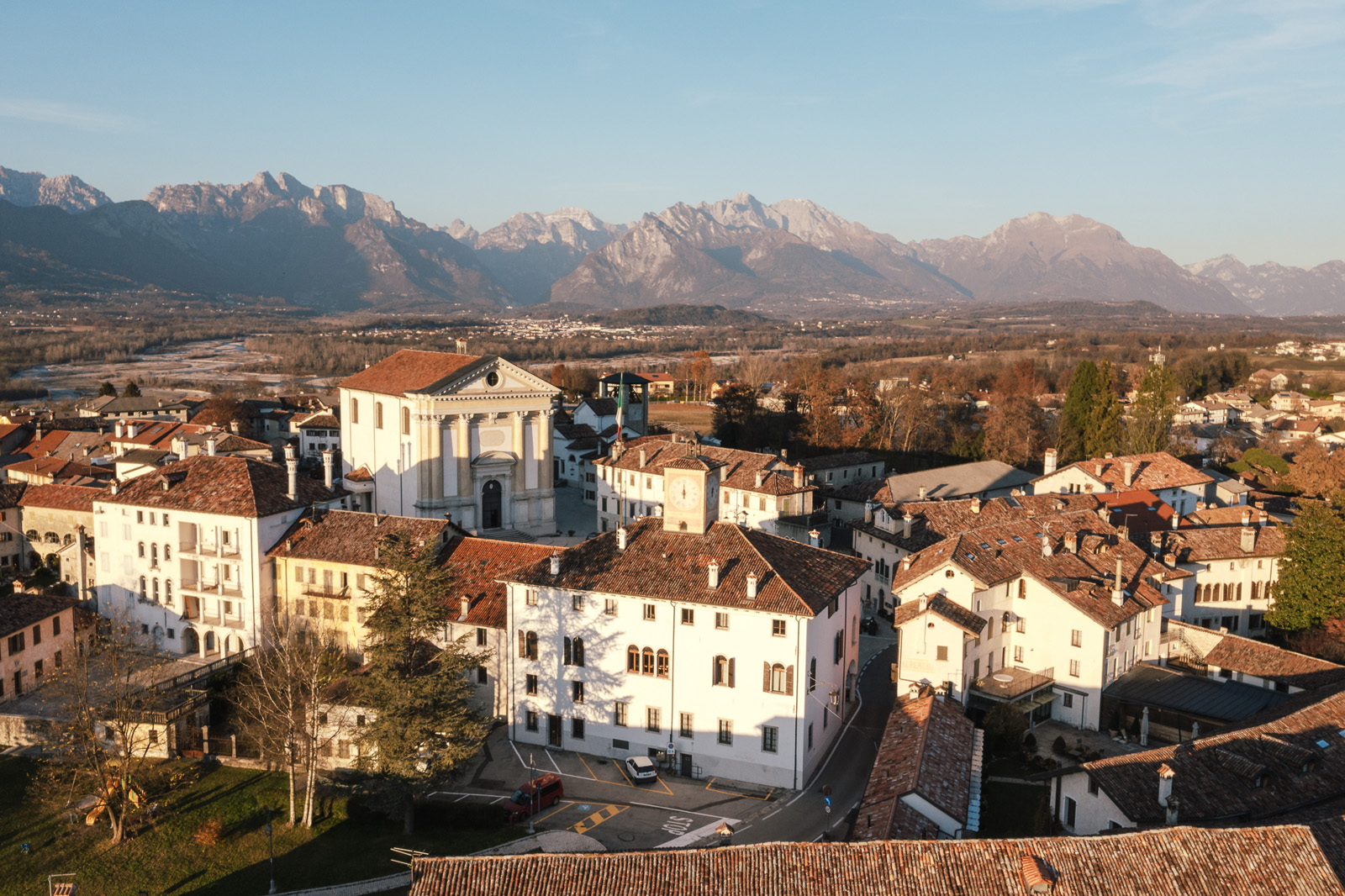
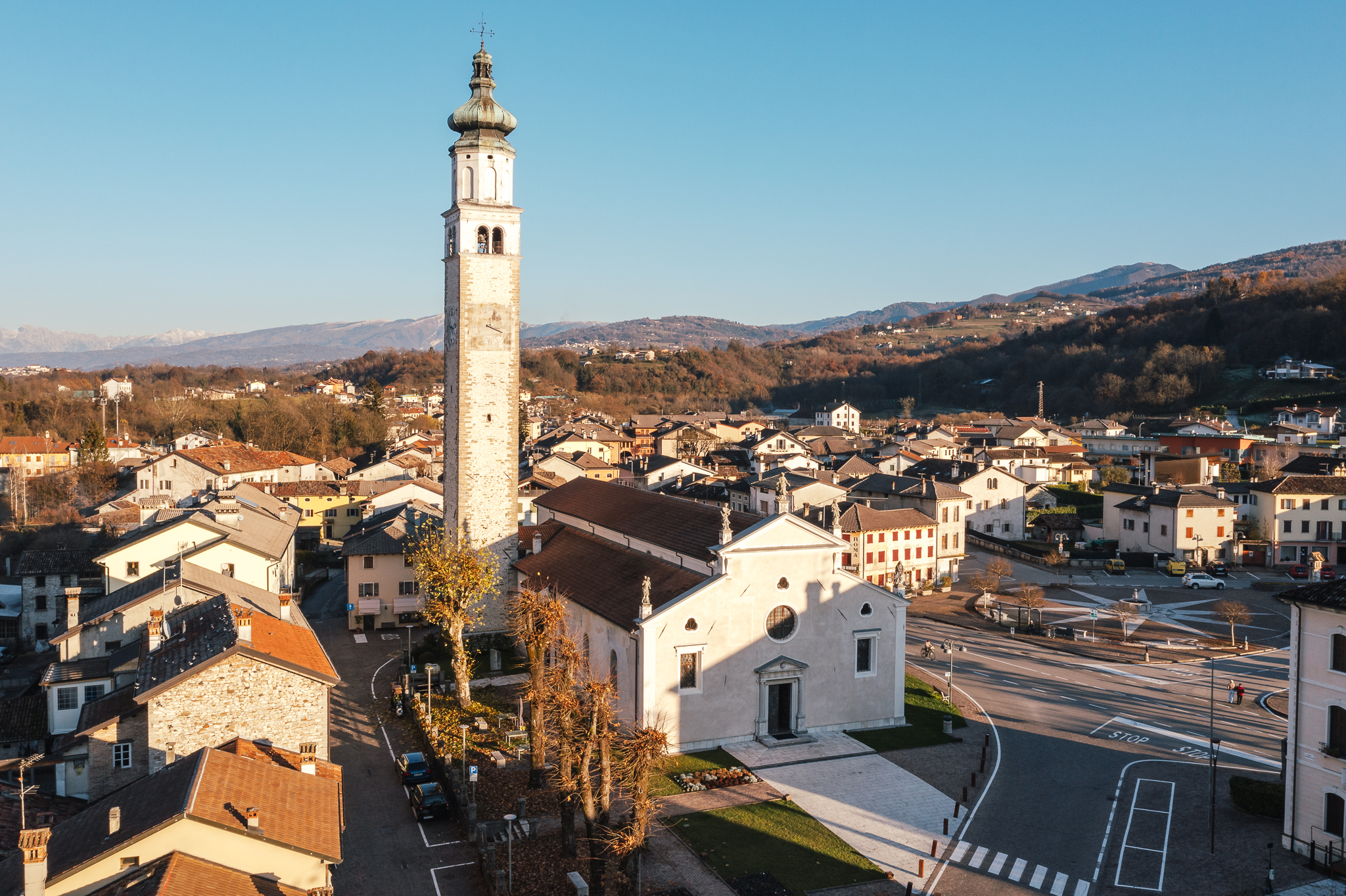
The riverside village of Cesana boasts ancient origins, as evidenced by its own name: the toponymic root refers to the gens Caesia, a sign of Roman presence. Excavations carried out in recent years have unearthed the remains of Roman walls and important traces of a settlement that developed between the early and late Middle Ages.
The village was built in a strategic position, linked to the control of the traffic of people and goods along the Piave river. At this point, the river bends, changes direction towards south, loses altitude and crosses a narrow rocky gorge where the waters accelerate. These features are not very visible today, but were clearly evident before the construction of the dam bridge and the artificial reservoir, which have profoundly changed the landscape.
In the event of particularly rough waters, the rafts carrying goods were unloaded upstream of the rapids and reloaded downstream to avoid losing their cargo. The importance of the ford is also confirmed by the presence of bridges between Cesana and Busche, documented starting from the 13th and up to the 15th century: the last one is mentioned in a Venetian chronicle from 1483. For almost four centuries thereafter, the crossing was made using a system of flat-bottomed ferries, which were also suitable for transporting carts. The first modern metal bridge was built in 1886, but was destroyed during the First World War.
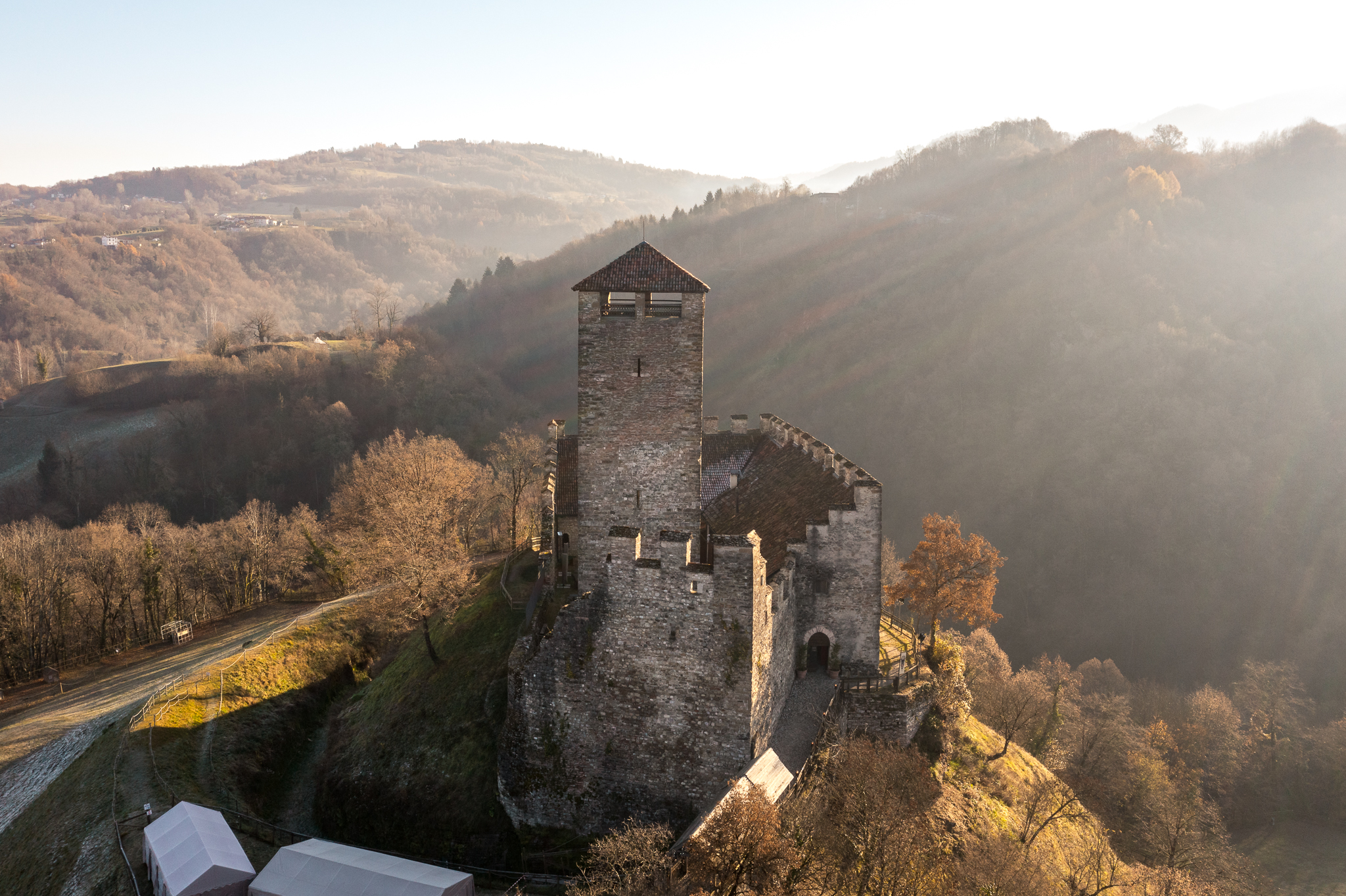
The fiefdom of Cesana appears in documents dating back to the end of the 12th century, when the centre of power was located on the Mota hill, a rocky outcrop overlooking the Piave river and protecting the village from flooding. A castle stood on the summit, while a river customs station, known as a muda, operated along the river. Throughout the Middle Ages, the lords of Cesana maintained close vassalage and business relations with the Episcopal County of Feltre. Its strategic position and the income derived from customs duties made Cesana the target of the great feudal families of Treviso. Between the 12th and 13th centuries, the village was subject to the Crespignaga-Tempesta, the da Camino (lords of Zumelle) and the da Romano (Ezzelini) families.
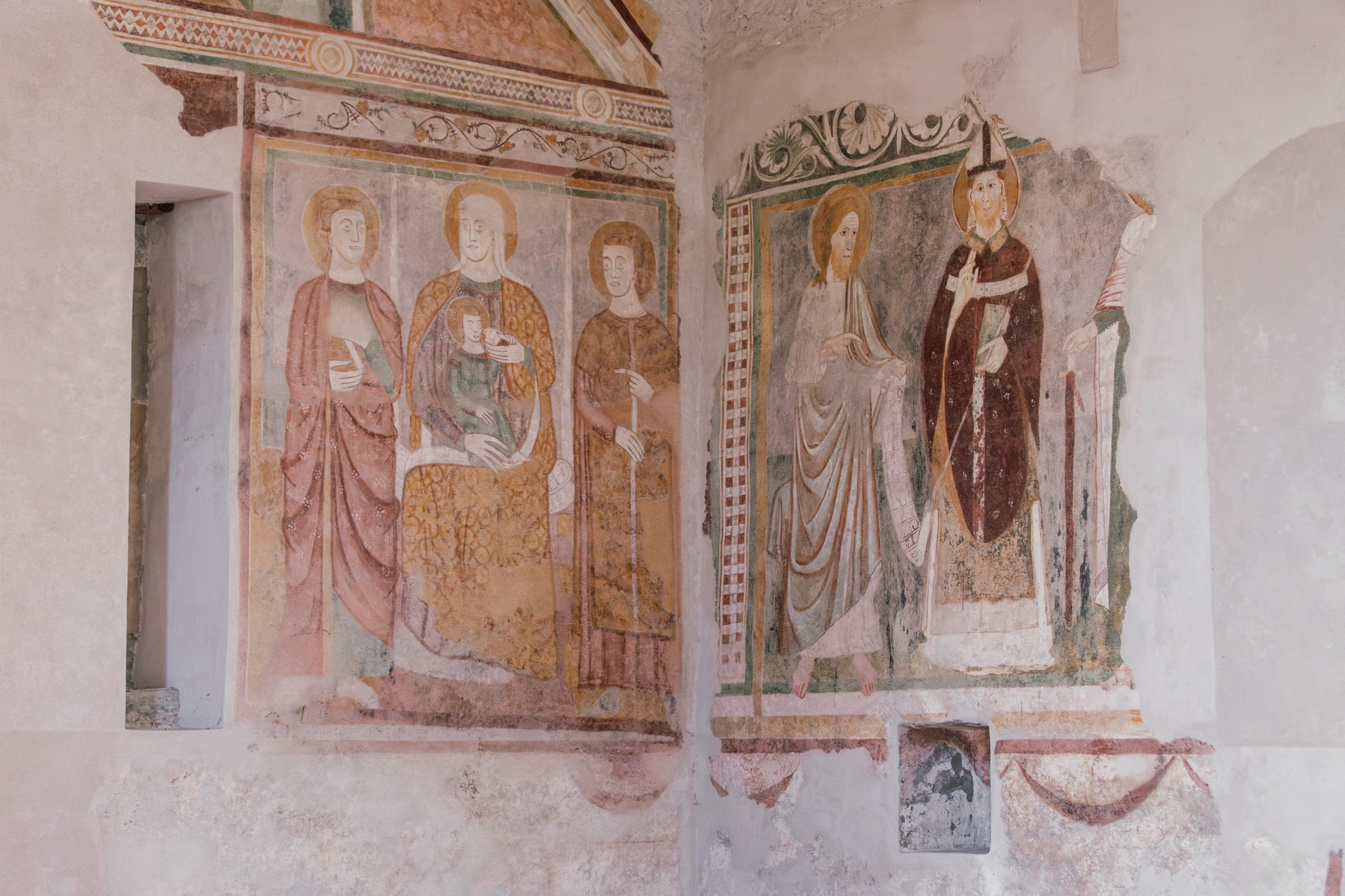
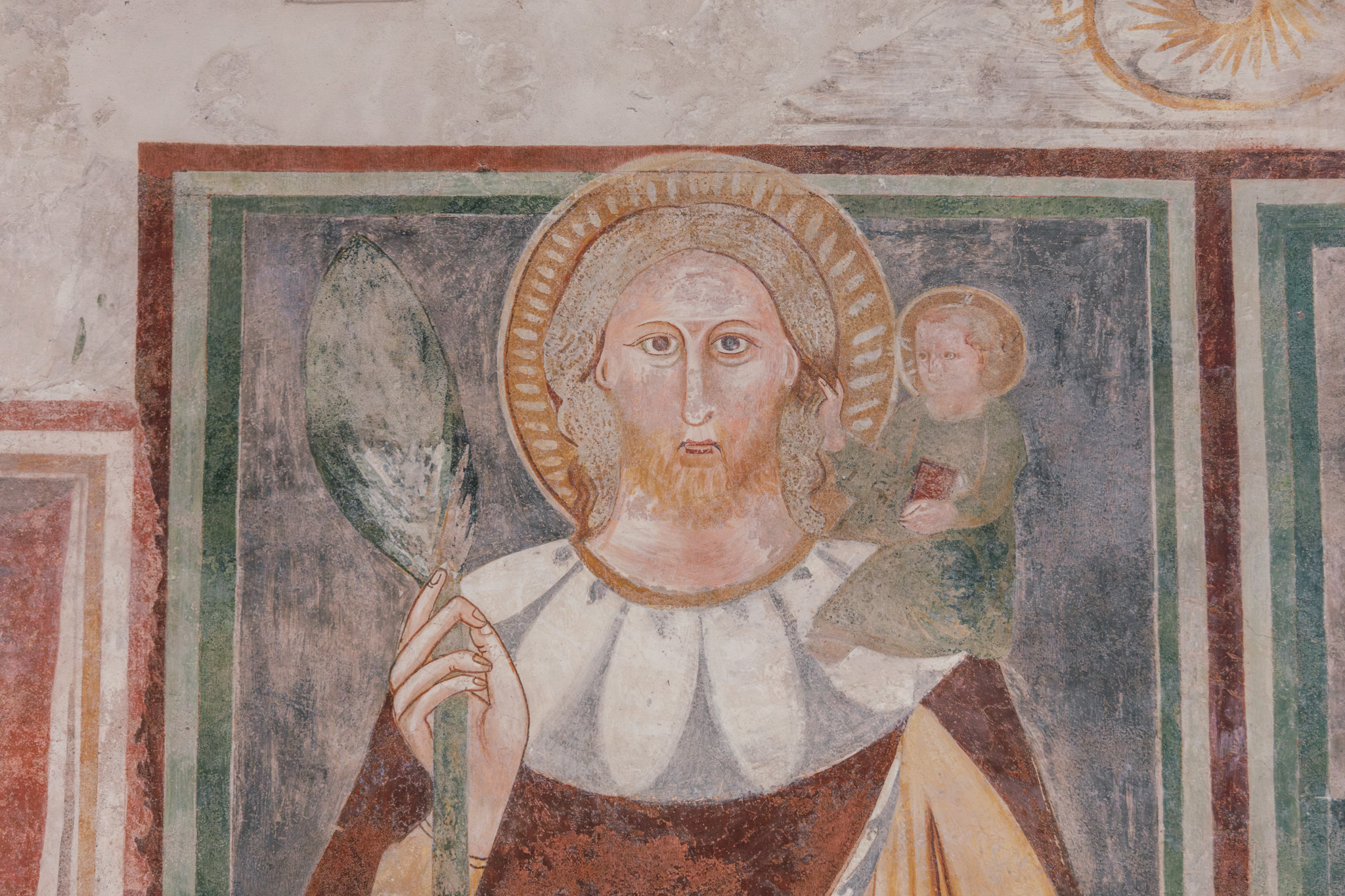
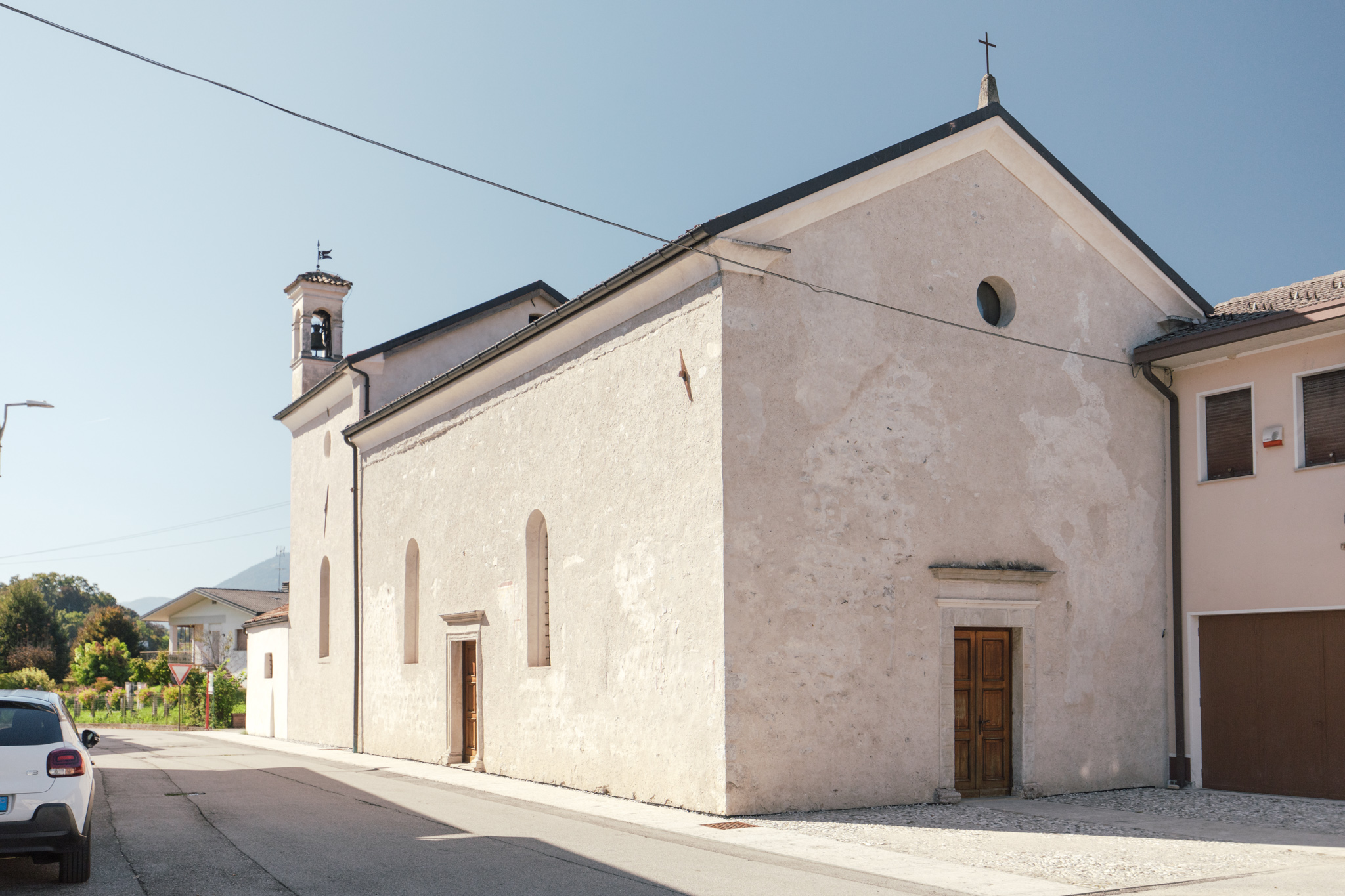
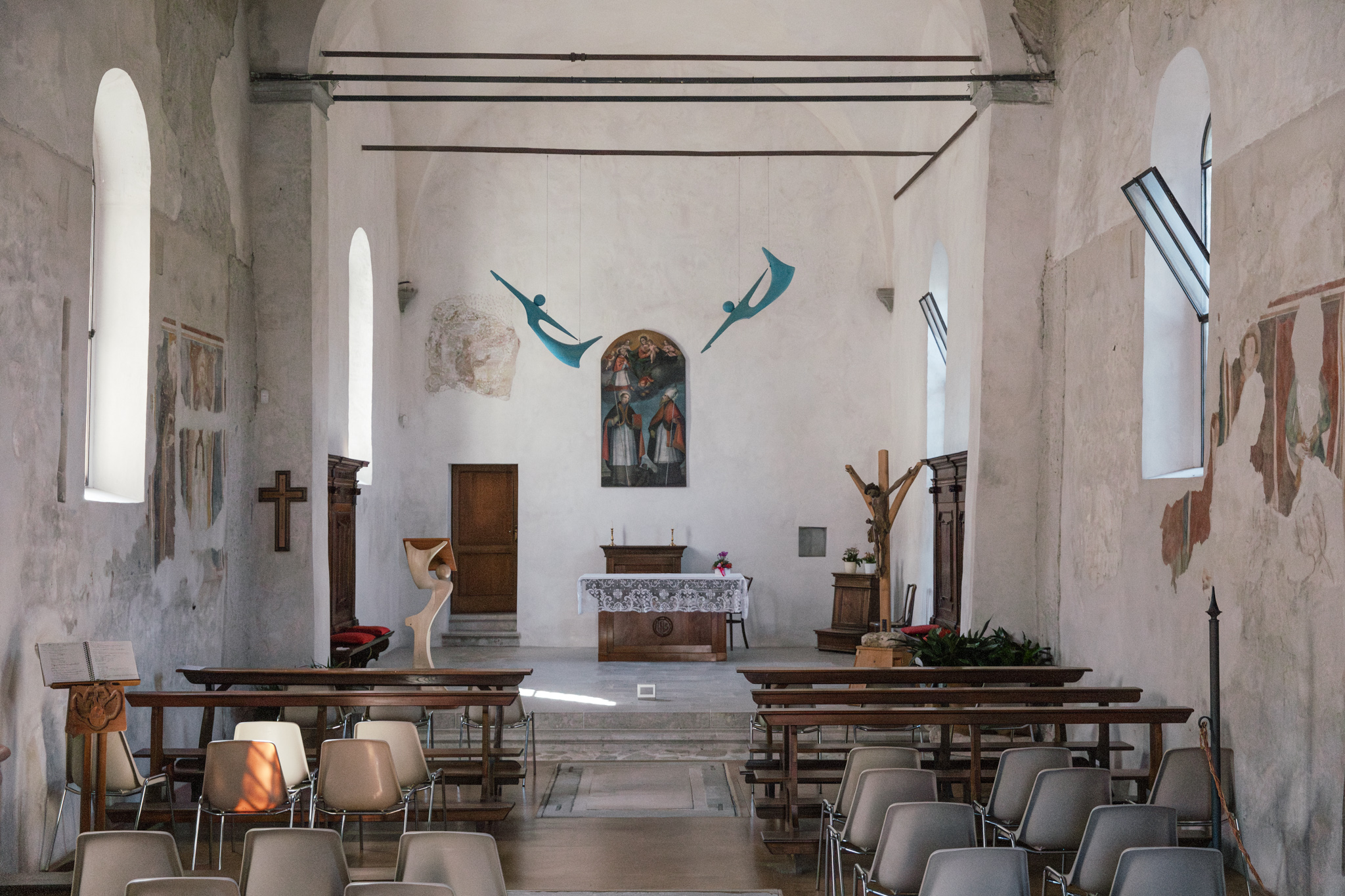
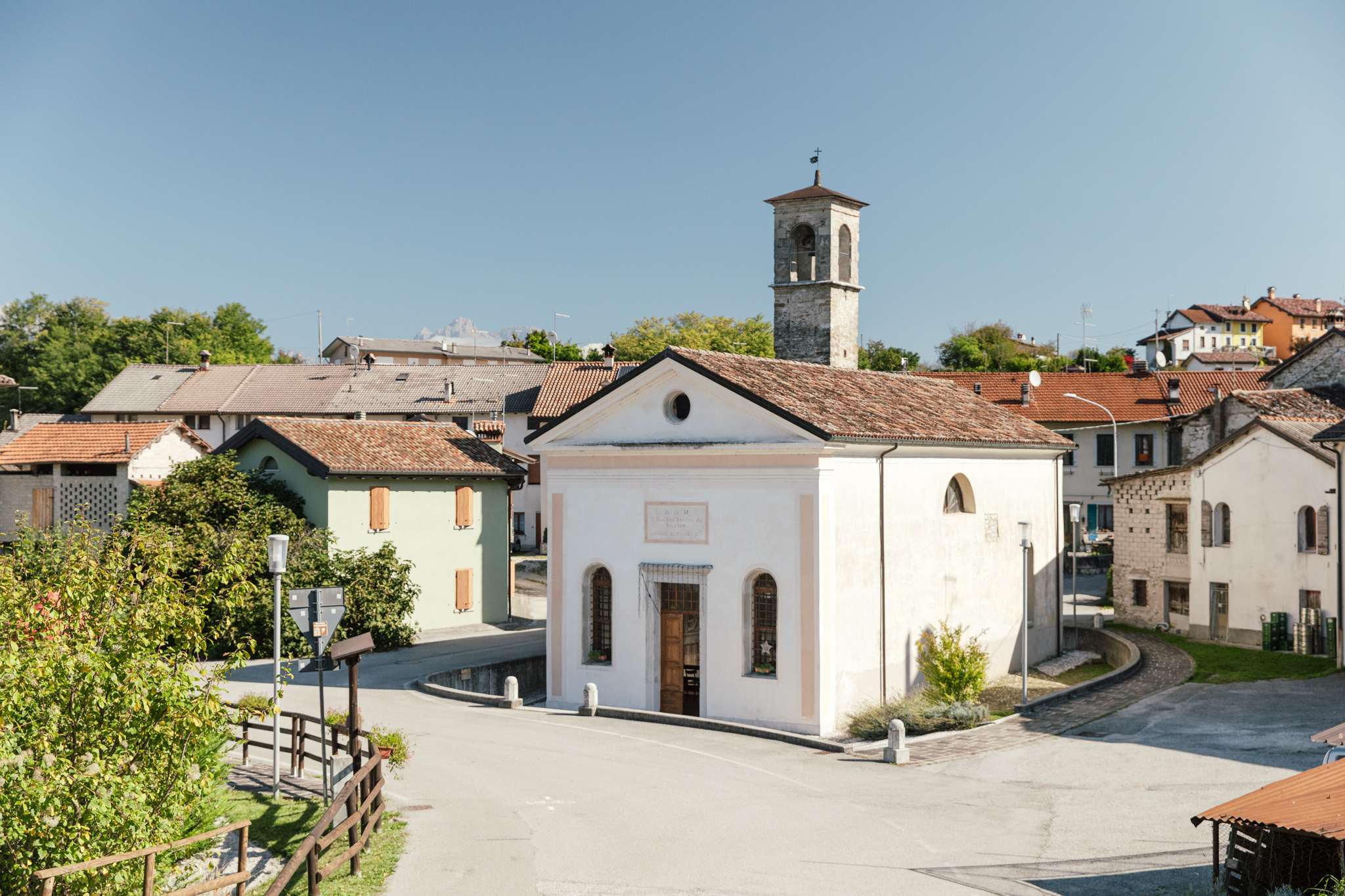
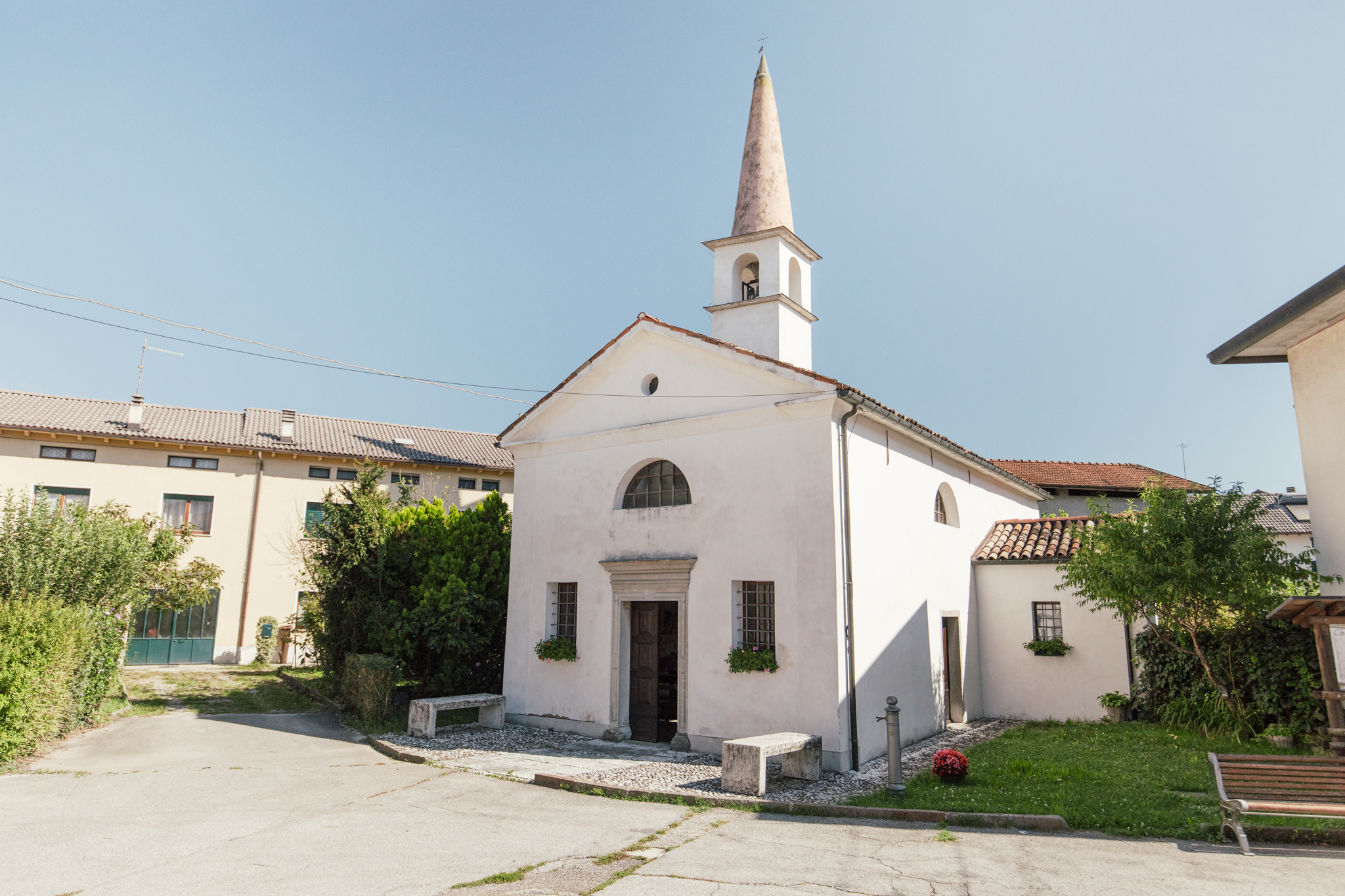
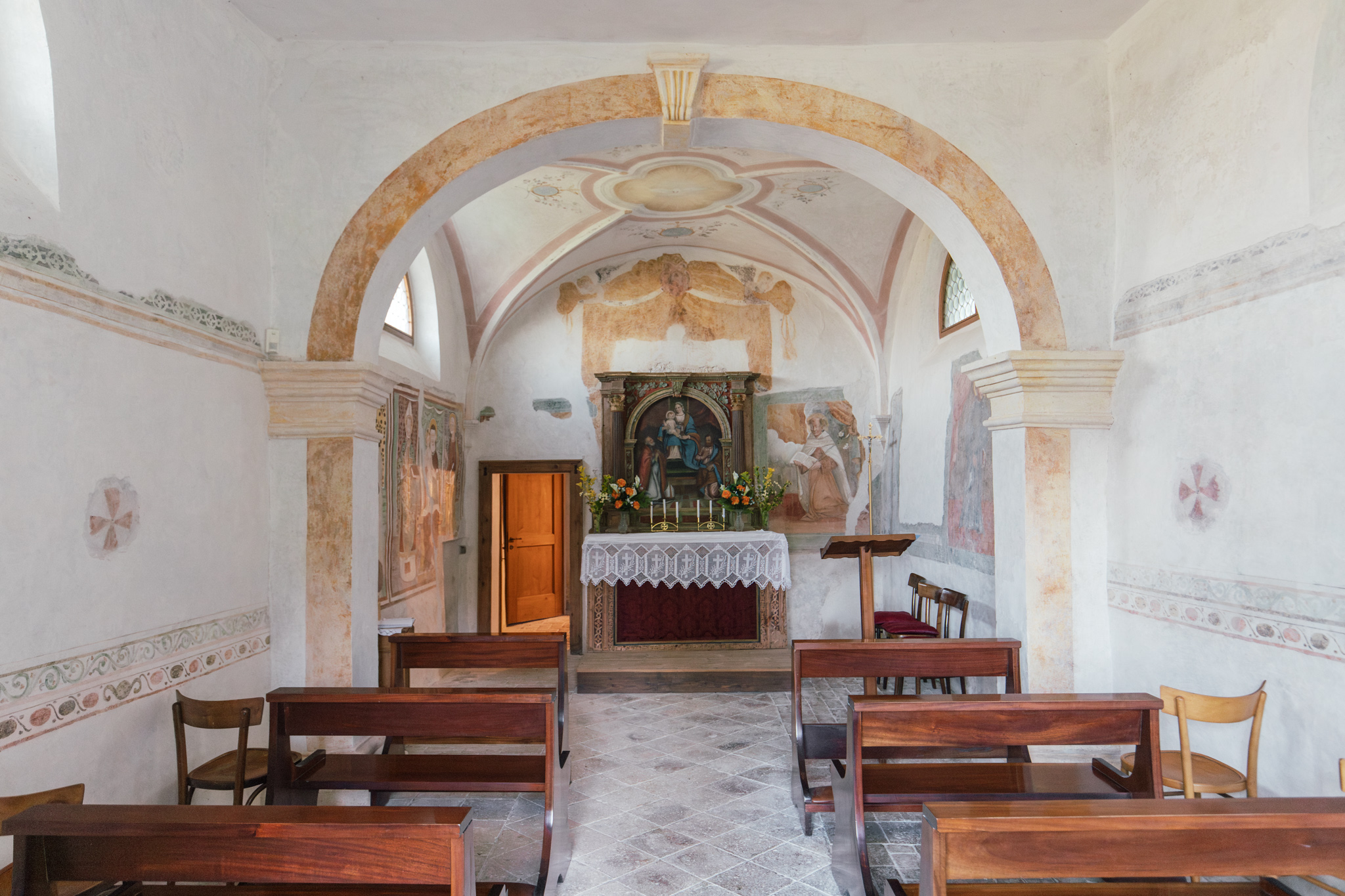
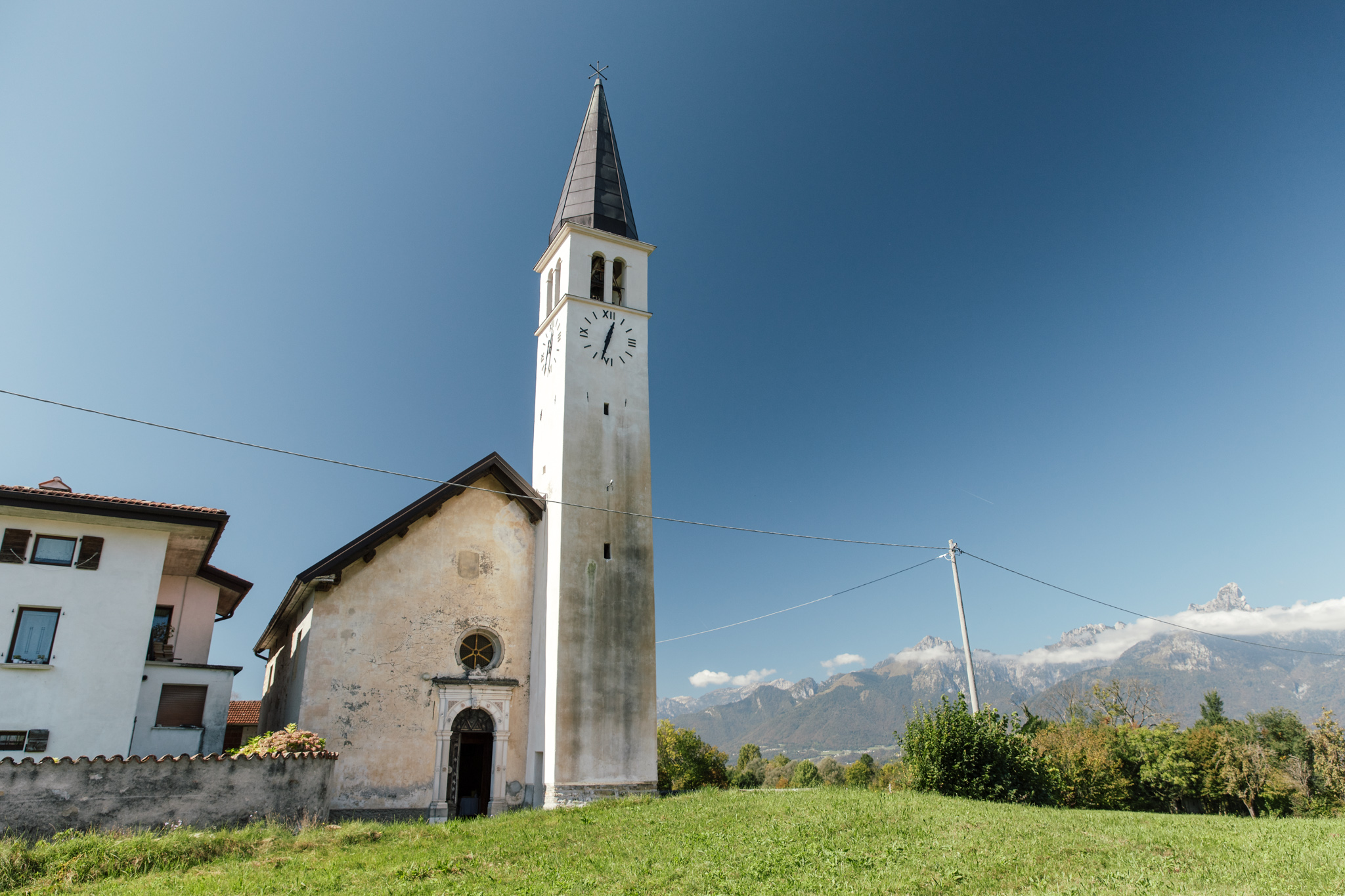
At the end of the 12th century, the fiefdom became a county, governed by a consortium of four local families, known as the da Cesana. The name was retained until the 15th century, when the surviving branches took the surnames Colle, De Mozzi and Vergerio. During the 14th century, the counts were repeatedly invested by the sovereigns of the Holy Roman Empire and shared power with important pro-imperial families, such as the Scaligeri, Carraresi and Visconti. It was the Visconti who endowed the county with a statute, regulating the administration of civil and criminal justice. Today, the 12th-century Cistercian church dedicated to St. Bernard of Clairvaux, which preserves frescoes from the 13th and 14th centuries, is a visible landmark from the medieval period.
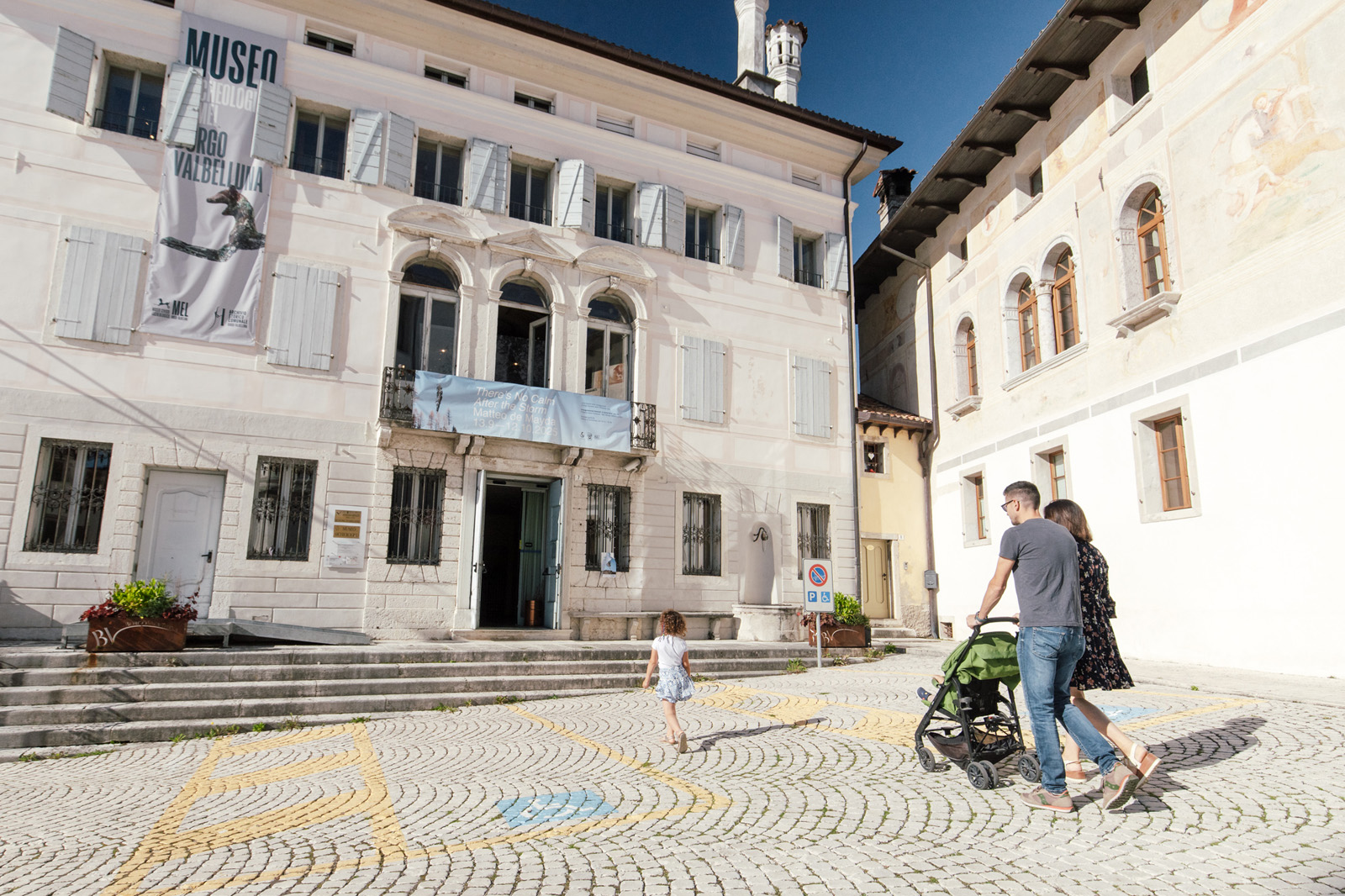
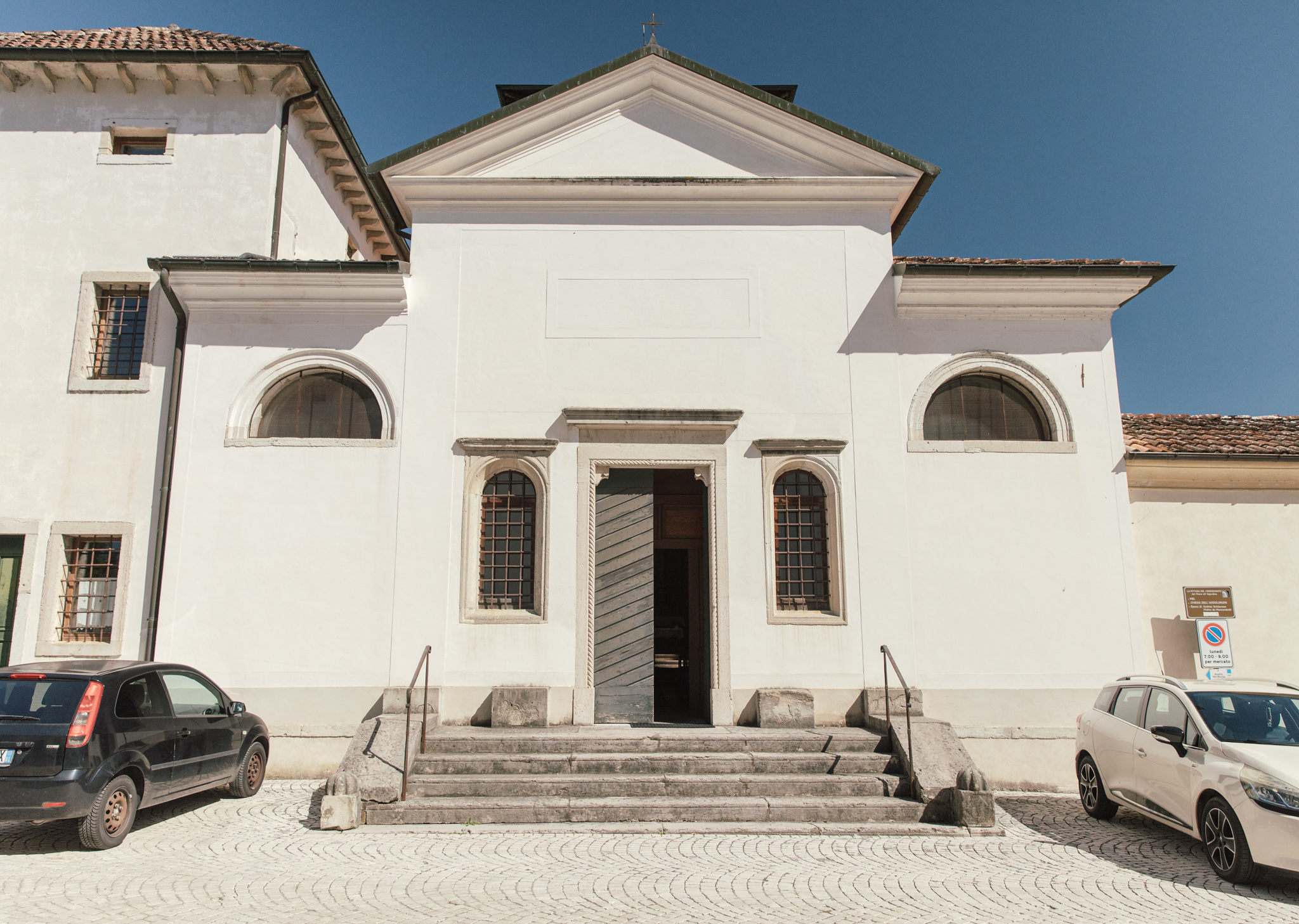
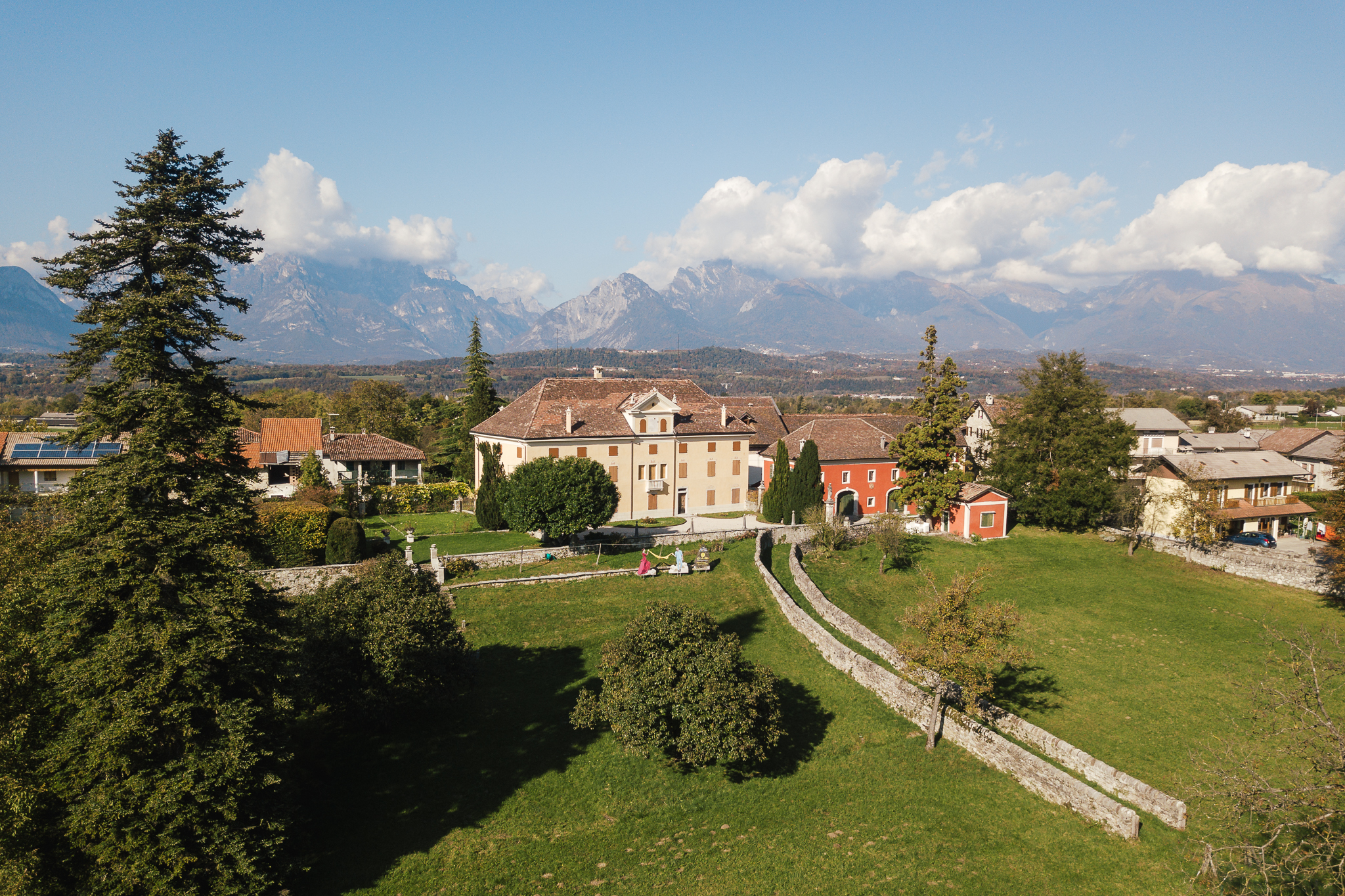
In 1404, after the Visconti family withdrew from the Belluno area, the Counts of Cesana spontaneously submitted to the Republic of Venice. Doge Michele Steno confirmed their investiture and their right to administer justice. The Palazzo Pretorio, a 16th-century building decorated with 17th-century frescoes, dates back to this period and is still today a symbol of the village’s Venetian past. The County of Cesana survived even after the fall of the Serenissima, until Napoleon Bonaparte decreed its end in 1806. In the following decades, under the Napoleonic Kingdom of Italy and then under Habsburgic rule, Cesana was the capital of the municipality of the same name. After the plebiscite for annexation to the Kingdom of Italy in 1866, a royal decree of 28 March 1867 definitively assigned the role of village capital to Lentiai.