Made of stone is also the internal staircase leading to the upper floor. The balcony with wrought iron railings is particularly charming, offering views of the Valbelluna and the Belluno Pre-Alps. The garden in front of the villa hosts concerts and literary evenings, including some that are part of the Trichiana Paese del Libro literary festival.
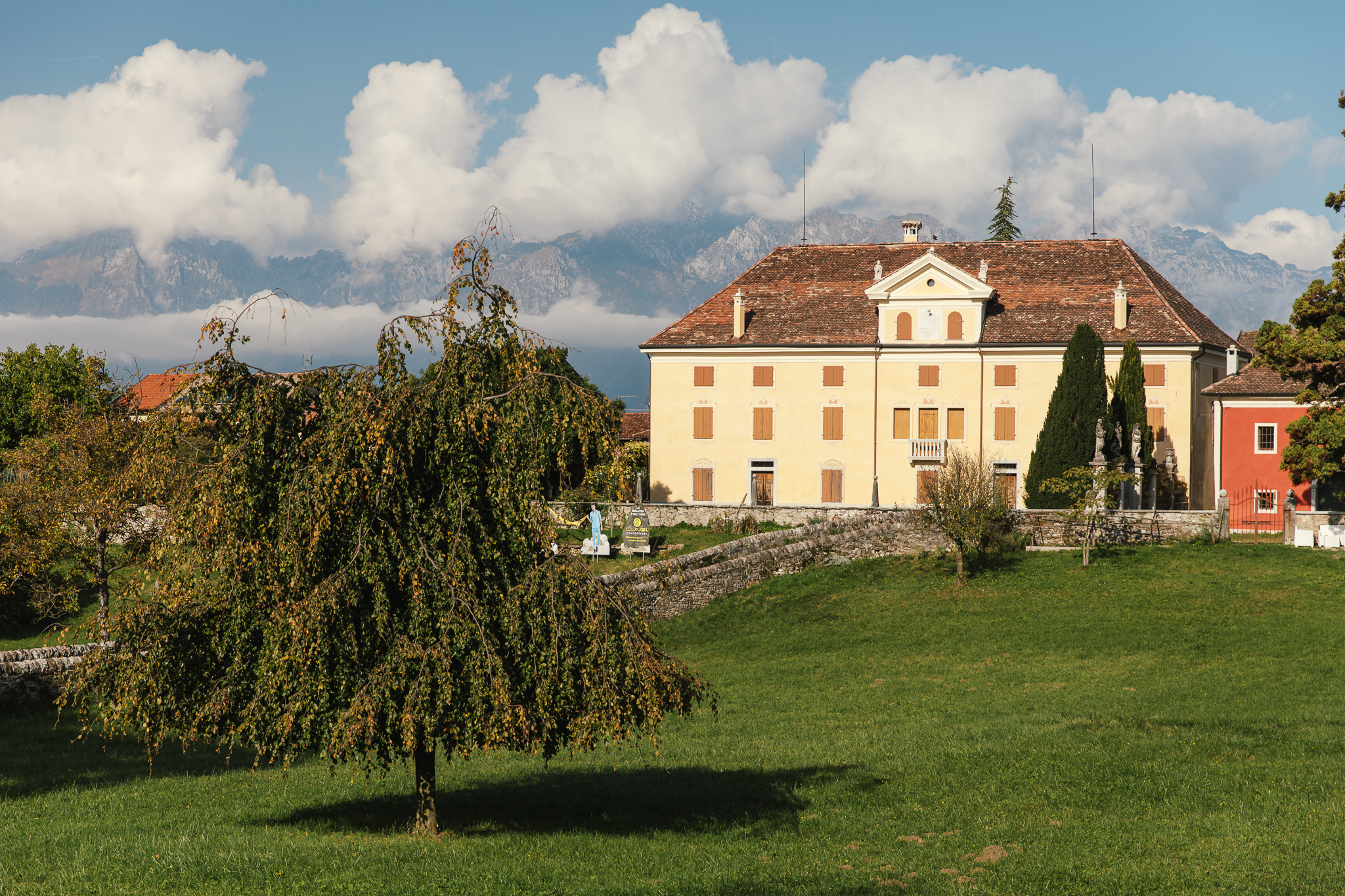
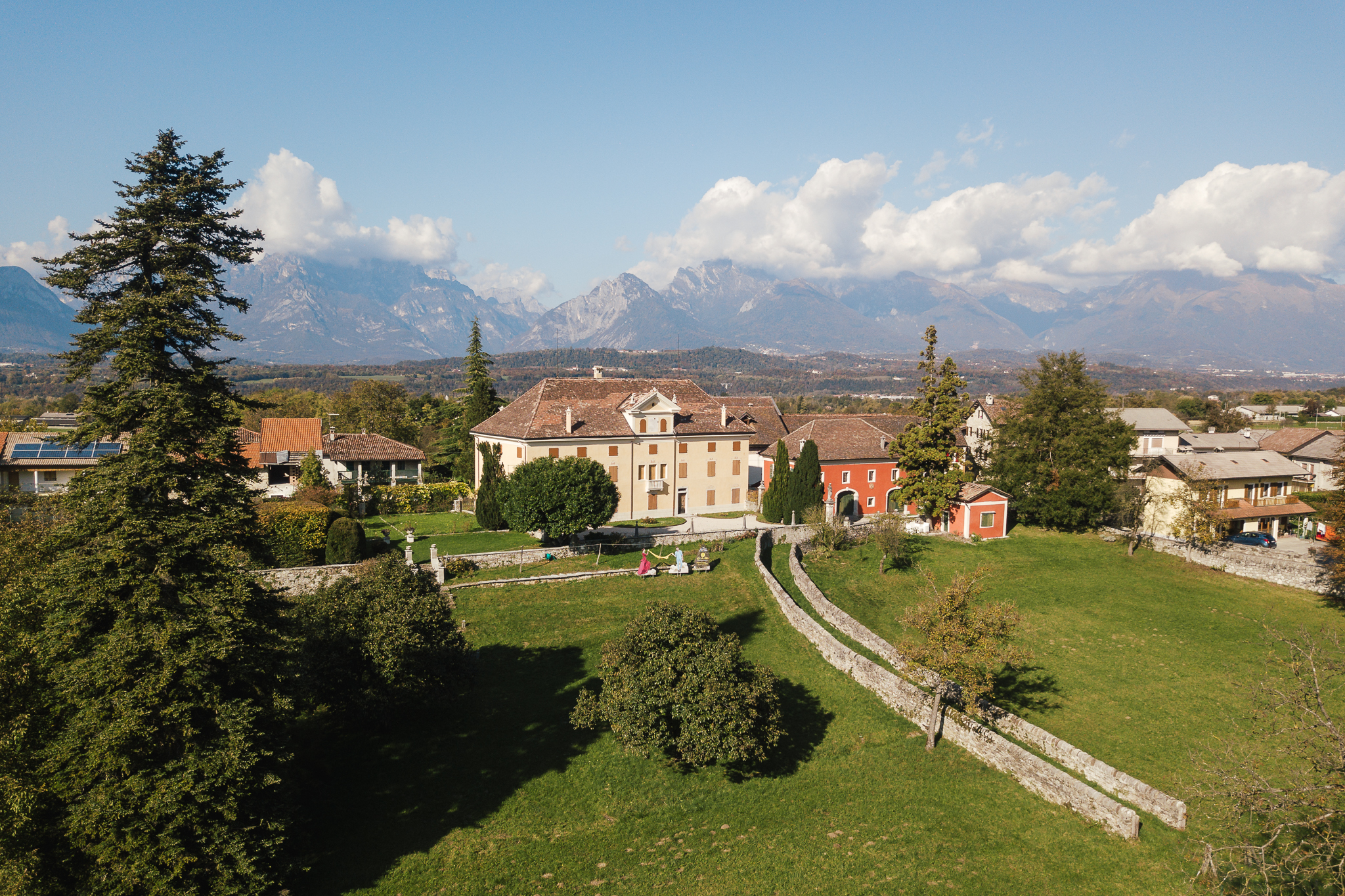
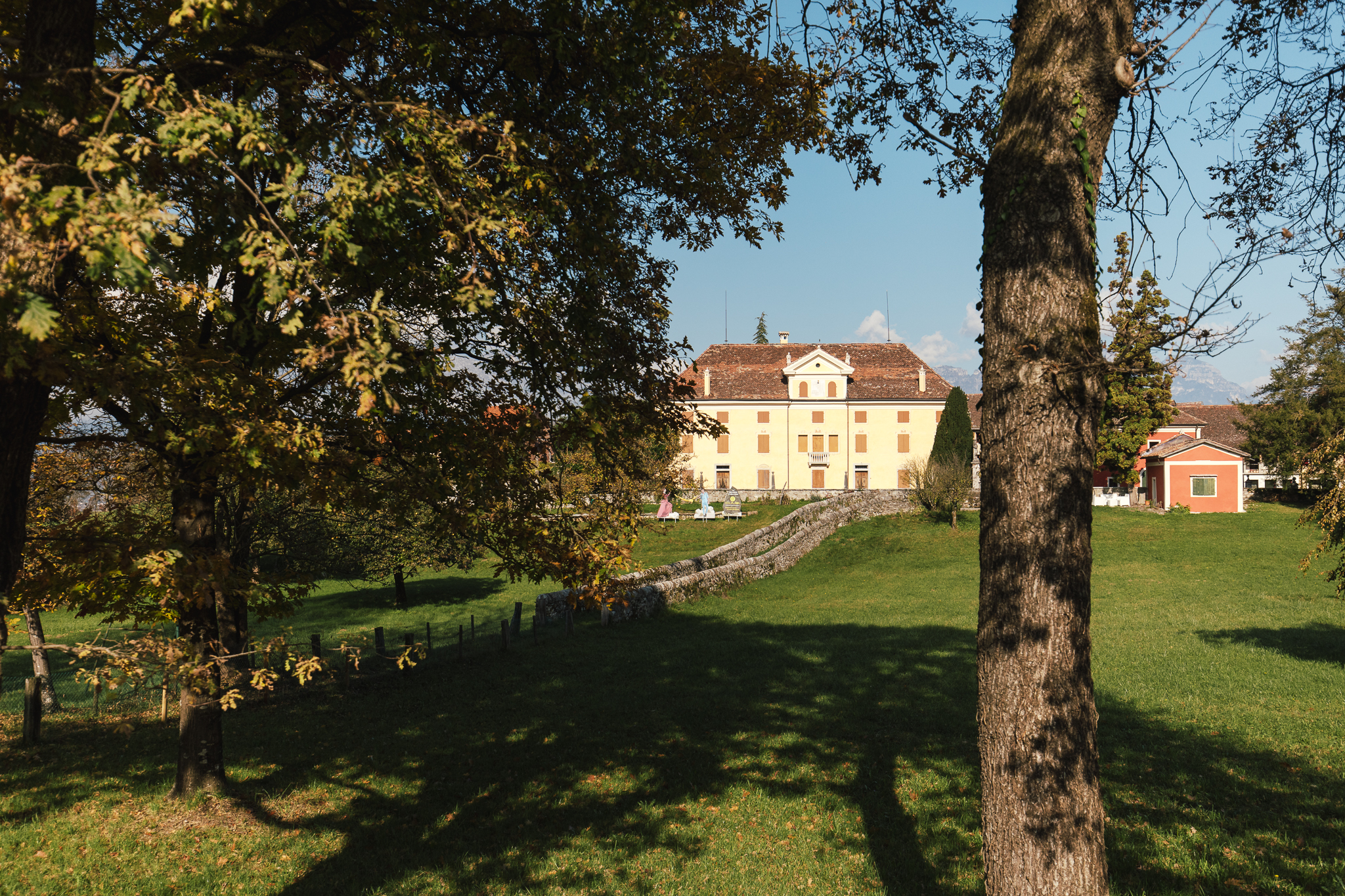
Casteldardo is home to Villa Piloni-Federici-Foscolo (16th century), located in an area of great historical value, as it was a crossing point for those coming from Treviso via the San Boldo Pass, and probably close to the remains of the ancient castle of Casteldardo, which was razed to the ground in 1193 during the battle between Belluno and Treviso. On the façade next to the main entrance, there is a plaque commemorating this event, bearing the famous “ritmo bellunese”, one of the oldest examples of the Venetian language.
This document recounts the destruction of Mirabello Castle or Castello d’Ardo in 1193 and is a valuable testimony to the thousand-year history of Valbelluna.
In the 18th century, it was extensively restored, and the original garden, described in the 16th century by the painter and miniaturist Cesare Vecellio, underwent major changes with a complete reorganisation of the landscape.
The original had “fragrant flowers of every kind, green herbs of every season, beautiful paths, well-arranged shrubs, tall and lofty fruit trees of every variety of singular excellence”.
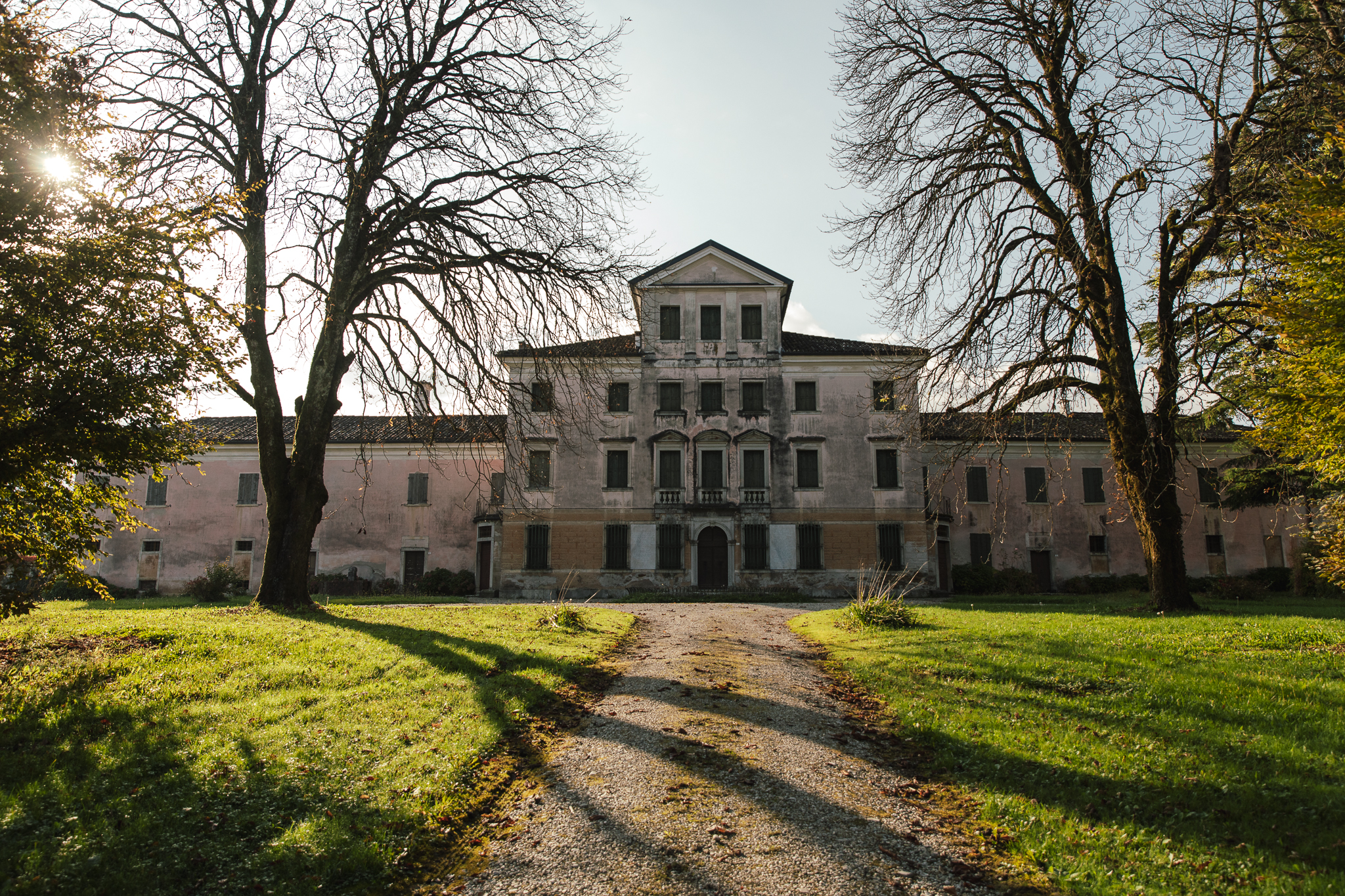
At the end of the 19th century, as attested by a plaque, Antonio Federici, then owner, decided to undertake a complete reorganisation of the grounds, entrusting the project to engineer Antonio Caregaro Negrin (1821-1898). New avenues were laid out, crops were increased and an aqueduct was built to supply the fountains and the low pool in front of the entrance. It is accessed via a long driveway and consists of a three-storey main building. It is currently a private residence.
Villa Alpago Novello (18th century) is located in Frontin: the building is the result of the merger of several previous buildings and has undergone further additions in subsequent centuries.
The villa has three floors with a hipped roof. There is no real main entrance, but rather two side entrances and two staircases, while from the south, a path bordered by low stone walls leads to the side entrance. Inside, the so-called “Marfisa” room is particularly interesting, featuring humorous prints from the 18th century.
During the First World War, the villa was looted and devastated, and numerous valuable books were sent to Austria. Today, the villa still houses a remarkable library, the result of the patient restoration work carried out by Luigi and Alberto Alpago Novello.
In the little village of Pialdier stands Villa Montalban (18th century): initially built as a separate building, it was later incorporated into the adjacent buildings of the village. It is characterised by an elegant gable supported by four Ionic columns protruding from the wall (pilasters) that define three openings with a balcony flush with the façade.
Further up, in Sant’Antonio di Tortal, is Villa Girlesio (17th century): the first owners of the Antica Villa Sophie, and for many years, were the Scarpis, originally from Parma-Piacenza, who arrived in Belluno in 1451.
In the Antica Villa, more precisely in the west wing, the coat of arms attributed to the Scarpis family can be seen facing the street, similar to the one on the tombstone outside the village church. In the 17th century, the Girlesio family, a family of notaries and jurists, took over, and their coat of arms appears on the villa’s fireplace.
In the 17th century, the Girlesio family, a family of notaries and jurists, took over, and their coat of arms appears on the villa’s fireplace. In the 20th century, the villa was involved in the troubled history of Europe during that century, especially during the Great War. In 1917, Austrian troops occupied the Valbelluna area and, within a year, had plundered villas and homes, including Villa Girlesio. Finally, in 1920, the property passed to the Cortina family, who also purchased the surrounding meadows and built the stable and barn.
Famous members of this family include Aldo, Mario and Renzo Cortina, brothers who achieved success in the world of culture and publishing in Milan in the 1950s and to whom Trichiana owes its title of “Paese del Libro” (Town of Books).
The “staircase of time” is particularly evocative. This internal staircase displays objects used in various eras, which ideally narrate the succession of events that have characterised the villa. It is currently a private residence and holiday home.
Finally, in Villanova stands Villa Agosti (19th century), currently home to the Senior Citizens’ Service Centre (a nursing home).
It stands on a slightly sloping plot of land alongside the Tuora stream. Behind the villa, on top of a small hill, there is a recently renovated temple. The large garden, enclosed by a low stone wall, preserves some century-old ornamental plants.